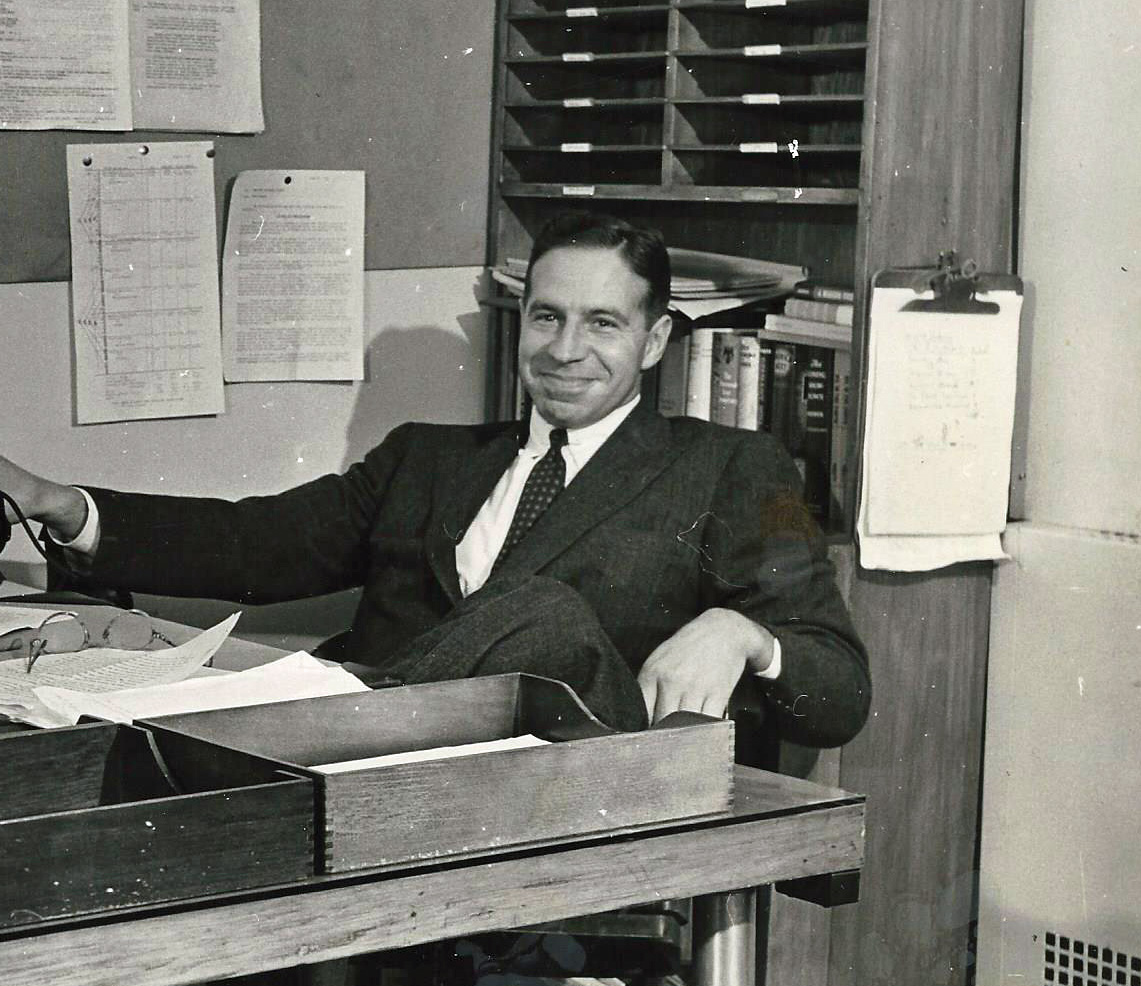
As the Koch Brothers were stalking ownership of Time Inc., (the Time Life empire that includes the once mighty Time Magazine), I wrote here from a standpoint of somewhat unique personal experience about how, whatever we may worry that Time will become, subject to Koch influence, that Time Magazine was
not exactly a very liberal magazine to begin with. In the course of doing so, I wrote about my uncle, Ralph Delahaye Paine, a Time/Life man of significant stature in his time. See:
Kochs Move To Acquire Ownership In Time/Life, Which On The Political Spectrum Was Previously. . . (Let Me Tell You) - Our Media, Never In a Good Place, Shifts Toward. . ?? Friday, November 17, 2017.
Time Inc. currently publishes
Time, Sports Illustrated, People, Fortune and
Entertainment Weekly.
Since I last wrote, the Koch ownership acquisition has
gone forward. And since that time I have come across and had a chance to remember and think about a letter in praise of my uncle written after his death to
Fortune magazine by revered economist and writer John Kenneth Galbraith. It expressed Galbraith's opinion of where on the political spectrum
Fortune magazine (not necessarily
Time) was under the stewardship of my uncle:
That
Fortune was
“with some exceptions . . . by the standards of the time dangerously to the left.”
The Koch acquisition of the interest in Time Inc. is reportedly causing
consternation about Time’s editorial direction internally on the part of Time staff and one former Time editor, Charles Alexander has
promulgated his worry that his 23-year of work at Time work will
go "down the drain." Although he admits that Time was a
“conservative publication” under publisher Henry R. Luce with that
“bias” persisting
“for a long time after Luce’s death in 1967," Mr. Alexander points out Time Magazine’s important converge of climate change, a subject about which the Kochs, in the fossil fuel industry, have invested long and massively to spread
disinformation about.
Jane Mayer, author of "
Dark Money," about the Kochs and how they have built up their political machines and influence,
obtained thoughts on the Koch Time Inc. investment from Emily Bell, a professor of professional practice at the Columbia University Graduate School of Journalism for an article in the New Yorker. Bell said that she doubts that the Kochs have put six hundred and fifty million dollars into the purchase of a media company saddled with ailing print publications only for financial reasons:
“It can’t just be the return on investment, because, if so, you’re in the wrong asset class,” she said.
When ownership of publications changes hands, It is not just the
future slant of the publication that should be worried about. Sometimes what had been published in the
past vanishes or becomes less accessible. That is what
recently happened when the Gothamist, providing coverage of local New York City news, was acquired by an opinionated conservative Republican buyer.
That’s one reason why we
need libraries. Not everything is available on the internet; not everything
remains on the internet.
One thing you can’t currently find on the internet is the letter, published in
Fortune, that John Kenneth Galbraith wrote in tribute to my uncle Ralph Delahaye Paine after his death in January 1991. In it, Galbraith expresses his view that the writing in Fortune magazine, under my uncle could be considered
on the left for that day and age. I can offer that Galbraith's assertion to balance out the observation I made when previously writing about the pending Koch investment in Time Inc. that Time magazine was
not very liberal when reporting about the Vietnam War.
 |
| Ralph Delahaye “Del” Paine Jr. in the FORTUNE years |
To reiterate,
Fortune is
one of the publications in which the Koch’s have acquired an ownership interest. Here is what Galbraith wrote about my uncle and the time he spent working under him at
Fortune:
IN TRIBUTE TO DEL PAINE
I read in January of the death of Ralph Delahaye “Del” Paine Jr., who was editor and managing editor of FORTUNE from 1941 to 1953 and publisher from 1953 to 1967. I share with the present editors and the readers of FORTUNE my admiration and affection for a truly notable and much-loved figure in the history of journalism.
In the autumn of 1943 I joined the editorial staff of FORTUNE. I was never more content. Gathered under Paine was perhaps the most remarkable community of writers ever brought together on one magazine. Archibald McLeish, Dwight McDonald, and James Agee had but recently departed. The inimitable Eric Hodges of Blandings fame, Wilder Hobson, and the Davenport brothers, Gilbert Burke, and others were very much present. All were young; all shared an unqualified respect and affection for our young editor, then in his mid-30s.
With some exceptions we were by the standards of the time dangerously to the left. For some, like Dwight McDonald, Marx was a far from irrelevant figure. More generally, the New Deal was seen as an essential design for escaping the widespread economic devastation of the Great Depression. It was Del’s task to make us reasonably acceptable to our business readers.
This heated with intelligence, tact, and charm. He was assisted by the thoughtful view, strongly supported by Henry R. Luce, that businessmen would rather read well-written, interesting, politically debatable articles with pleasure and comprehension then basically unintelligible prose with which they might agree. The acceptability, even prestige, of the magazine affirmed the rightness of this view.
JOHN KENNETH GALBRAITH
Cambridge Massachusetts
The letter, clipped from
Fortune, hangs in my mother’s hall. I’d like to think that when John Kenneth Galbraith himself died in 2006 my mother returned the favor by writing to Galbraith’s family, his four sons included, to recollect some of the flattering things my uncle had to say about Galbraith, but I am not sure that happened.
John Kenneth Galbraith was not just a famed economist and writer; he was also a member of John F. Kennedy’s administration serving formally under Kennedy as ambassador to India. The other day I was listening to John Kenneth Galbraith’s son, James K. Galbraith, explaining how Kennedy involved his father to support him in his efforts to pull out of the Vietnam War. James K. Galbraith is an economist and writer like his father who teaches as a professor at the University of Texas. The discussion was on Austin’s KUT public radio station program
Views and Brews hosted by Rebecca McInroy and he was speaking with Dr. John Newman, a retired U.S. Army Intelligence Officer and historian, about his book “
JFK and Vietnam.” (
V&B: JFK and Vietnam – What We Know & Why It Matters, May 18, 2017.
You may want to save this link if you want to find this talk again: Google’s algorithm doesn’t have this showing up quickly making it hard to find.)
Ultimately influential, Dr. Newman’s book documents with first-hand research evidence of JFK’s decision to withdraw from Vietnam just before he was assassinated, confirming and fleshing out accounts that the senior Galbraith shared with his son James. That book championed by James Galbraith is as of now recently available, but it was published 26 years prior only to be
suppressed and pulled from bookstore shelves by its publisher. That was despite the book's being reviewed on the front page of the New York Times Book Review Section by Kennedy special assistant and historian Arthur Schlesinger, Jr. who also said
"This commanding essay in critical history is the most authoritative account anywhere of President Kennedy's Vietnam policy and it is fascinating reading as well." Plus it was endorsed by former CIA head William Colby.
When the NSA failed to stop the book with unsuccessful claims its information was classified the publisher cooperatively made the book unavailable anyway. That is another example of why who owns the media is so critically influential what the public hears or reads about. Similarly, after 9/11 Michael Moore’s publisher was going to pulp, unpublished, a book it had printed that it felt was too critical of George W. Bush. When that book was rescued by a
librarian leading comrades it became a bestseller.
The KUT discussion was months prior to the release this year of Ken Burns’ “
The Vietnam War” on PBS, but Galbraith and Newman already knew and were dismayed that the Burns 18 hour documentary left out of its narrative any reference to Kennedy’s likely withdrawal plans. Another similar failure of the Burns documentary, at least in tone, that I found jarring is that while it covered the assassination of Martin Luther King, Jr. as a relevant major national event, the documentary, epically focused on Vietnam as its subject, didn’t note the incredibly strange resonance that King’s April 4, 1968 assassination was on the one-year anniversary of King’s historically pivotal April 4, 1967 Riverside Church
denunciation of the War.
It is interesting to review what is and is not deemed acceptable to express as the events of history re-contour the landscape around us. A lot of what gets said has to do with who are the gatekeeping
owners and
sponsors of our media.
I just recently rewatched on Turner Classic Movies the film
“Seven Days In May” about an attempted military takeover of the United States Government. The film was made from a novel of the same name published in 1962 written by Fletcher Knebel and Charles W. Bailey II, political journalists familiar with Washington D.C. who researched their subject. The film was made with help,
assistance and encouragement from the Kennedy administration, Kennedy reputedly believing it depicted threats that were real at the time. It was due for release in December 1963, which would have been just days after Kennedy’s
November 22, 1963 assassination. Because of the assassination, release of the film was
delayed until mid-February of 1964.
There are rumors that, after the Kennedy assassination, Frank Sinatra pulled from circulation director John Frankenheimer’s already released (October 1962) previous film,
“The Manchurian Candidate,” explicitly about a conspiracy orchestrating a political assassination in order to takeover the U.S. presidency. Even if the film wasn’t widely shown for a time after the assassination, according to Wikiepdia, those rumors have been disproved, and, additionally, the film was apparently revived at a cinema in Brooklyn, New York two months after the assassination.
Nevertheless, it is said that the Kennedy assassination also affected what was ultimately the content of Dr. Stangelove, another film released soon after the assassination, at the end of January 1964. The film was a satire about strategies of “
Mutual Assured Destruction” (MAD) devolving into nuclear Armageddon. Stanley Kubrick, the director, had filmed a
War Room pie fight to end the film,
“the best pie fight ever filmed.” However, the pie fight seemed tone deaf after Kennedy’s killing, including a portion where George C. Scott’s character General Buck Turgidson holding in his arms a pie-stricken U.S. president played by Peter Sellers as president says:
Gentlemen, our beloved president has been infamously struck down by a pie in the prime of his life! Are we going to let that happen? Massive retaliation!
The scene reportedly got as far as a test screening that occurred right around the time of the actual assassination. More likely Kubrick would have sacrificed the scene anyway realizing that no matter how technically executed it may have been it
did not sync properly with the film’s satire. In addition,
according to its screenwriter, Terry Southern, studio executives were apparently skeptical of the scene from the beginning plus they were beginning to turn on the film and disavow it as
‘un-American” or
“anti-military.”
Monday, September 10, 1962, evaluating the book “
Seven Days in May”
before Kennedy’s assassination and
before the movie was made, New York Times reviewer Orville Prescott
started out by putting it in the genre of Sinclair Lewis’
“ironically” titled
"It Can't Happen Here." He noted that the authors
“are both experienced newspaper men. . Both employed in the Washington bureau of the Cowels publication and judged by this book, they view the course of future events with considerable alarm and [t]hat they know much about the Washington scene, the routine life inside the White House and inside the Pentagon.” Prescott, however, offers no rousing endorsement of the book concluding that with
“stock characters” the prose does not
“make the most of” its plot coming across like a
“parlor game” that
“as a whole never seems real.” Acknowledging that it is scheduled to become a movie Prescott offers that
“it ought to make a better movie than it is a novel.” Notwithstanding, the novel was
a bestseller with an
appreciable run.
Returning to mention the novel in his
writing again a few weeks later about
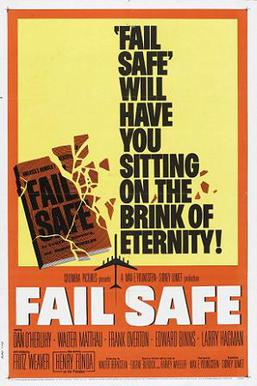
“Fail-Safe,” like
“Strangelove” dealing with the specter of nuclear Armageddon (October 24, 1962), Prescott commented that
“according to several of this autumn's new novels, the near future is going to be even more unpleasant than most of us sensible pessimists expect.” While Prescott opines that
“Fail-Safe” “cannot fail to chill the spinal columns of its readers,” and his verdict is that it was a
“slam-bang thriller” despite its
“deficiencies as fiction,” he concludes, much like he did with the novel
“Seven Days in May,” that the authors
“have no gift whatever for characterization” the
“prose is commonplace” and the
“dramatization . . crude and mechanical.” Again, the novel was, nevertheless, a bestseller. He does credit the authors for having done
“considerable research assembling declassified material” and with basing the novel on a real incident.
“Fail-Safe” too became a film, coming out after, but on the heels of “
Dr. Strangelove” (October 7, 1964). The film, although a drama rather than comedic, was so similar to “
Strangelove” that “
Strangelove” director Kubrick filed a
copyright infringement lawsuit against it (both were Columbia Studio pictures), settling that suit based on
an agreement that “
Fail-Safe” would come out
after his film. The devastating nature of the Kubrick comedy probably severely undermined and helped account for the poor performance of “
Fail-Safe” at the box-office.
The New York Times Bosley Crowther review of the film
“Seven Days in May” necessarily came out
after the Kennedy assassination. Under those circumstances, the
“suffering cats and little kittens!” exclamation accompanied lead-in of the review dealing with a film about
“not too farfetched speculations” seems oddly lighthearted. (Does that translate to “
farfetched”, but
not too “
farfetched”?) To wit:
It's beginning to look us though the movies are out to scare us all to death with dire and daring speculations on what might happen, any day in Washington.
First we had "Dr. Strangelove or: How I Learned to Stop Worrying and Love the Bomb," . . . Now, . . . we are offered a similarly fearsome prospect of the crisis that might occur if another Air Force general planned to seize control of the Government.
. . . One might ask what we're coming to if such shocking thoughts are penetrating the deep domes of Hollywood!
 |
| Rod Serling |
Crowther credits that the film “
gathers a sense of actuality and plausibility.” Actually, the script was obviously written with great seriousness by Rod Serling, of his very best. It has none the
`this-is-fantasy' or
`this-is-speculation' veneer with which Serling avoided censorship with his
Twilight Zone scripts. Many of the
Twilight Zone scripts Serling wrote were trenchantly
antiwar. By creating that science fiction fantasy anthology series Serling,
sorely vexed by censorship, mainly from television sponsors, but
not always just sponsors,
side-stepped such
censorship (a clever
ruse?).
Crowther praises Serling for one sentiment expressed by the film’s fictional president, played by Frederick March, who says that the enemy is not the general, but the nuclear age:
“It happens to have killed man's faith in his ability to influence what happens to him.” To me (at least in 2017) incorporation of the sentiment that Serling
apparently recycled from the original novel rang hollow. The film as praised by Crowther and others is safe for its audiences, and perhaps for the larger world of the-powers-that-be, in that it hopefully holds out democracy, its institutions, the constitution, and basic human decency as strong enough to triumph. And it also sticks with the idea that the mutinous generals, still principled, just have a different calculation of what to do in face of their fear of nuclear weapons. . .
. . . What the film never offers is any idea of how
the money side of armaments can perpetuate their continuation and even use.
“Seven Days in May,” like
“Strangelove” and
“Fail-Safe,” is also about the balance of terror with Russian as a threat and the potential for worldwide nuclear holocaust. A plot point of analysis is whether the U.S. military coup, if successful, would have provoked the Russian attack the generals wanted to forfend against. Similar to how Crowther couches his praise for
“Seven Days in May,” “Fail-Safe” is sometimes praised as a superior to
“Strangelove’s” treatment of the same subject matter for being more soberly adult or
mature, because it launches its speculative disaster scenario from the presumption of
good intentions on the part of those in the military industrial complex.
Crowther’s review of
“Seven Days in May,” says that the
`plausibility’ of the plot (which takes place in what was then the future- May 1974) does not extend to
“one twist,” which is the supposition of a large secret military base-
some 3000+ men- in El Paso, Texas. Next to the Mexican border El Paso is the actual location of
Fort Bliss, one of the largest military complexes of the United States Army and very active in recent years as the largest training area in the United States, plus the home of other security facilities. It is the home of
one of the
privately-owned ICE immigrant detention centers about which the public knows little these days even as these private ICE centers operate
outside most conventional laws and the United States and
ICE funding and
private ownership of ICE centers is increasing dramatically. If
“Seven Days in May” was remade in another update, the takeover of the government would not be by the military, but by an even less accountable
joint operation between the military and the mercenary corporations the military industrial surveillance complex now contracts out to.
When it comes to the military industrial surveillance complex interesting questions can be raised about what one can write about. That is certainly the topic of director Steven Spielberg’s new
“The Post” film concerning publication of the Pentagon Papers that documented decades of lies by the U.S. government about the Vietnam War (to get back to one of original subjects), which the government enjoined the New York Times from publishing as a
violation of the espionage act. The papers were copied and furnished by Daniel Ellsberg a United States military analyst employed by the RAND Corporation at the time.
That was Daniel Ellberg’s role then. Ellsberg is only now, with his new book
“The Doomsday Machine: Confessions of a Nuclear War Planner” detailing information from his
“top-secret nuclear studies, his front row seat to the Cuban missile crisis” (the crisis that helped set the national consciousness for the nuclear war subject films discussed here) when Ellsberg was a consultant with the Pentagon and the White House. According to his account, Ellberg himself drafted plans for nuclear war and was privy to plans for nuclear war that were
“insane” and
“evil” in the hundreds of millions of people that would have been killed world-wide.
The question of what one theoretically can and cannot publish about the military can be interesting.
 |
| "Red Alert"- Original title |
The book
“Red Alert” from which
“Dr. Strangelove” was made was published in 1958 in the United Kingdom. It was written by Peter George, an ex-RAF intelligence officer under the pseudonym Peter Bryant. The later more popular
“Fail-Safe” was published in the United States. Terry Southern, screenwriter for
“Strangelove,” asserts that because
“national security regulations in England, concerning what could and could not be published, were extremely lax by American standards” George was able to
“reveal details concerning the `fail-safe’ aspect of nuclear deterrence . . . that, in the spy-crazy U.S.A. of the Cold War era, would have been downright treasonous” and thus give all the
“complicated technology of nuclear deterrence in Dr Strangelove” a base “
on a bedrock of authenticity” that gave the satirical film the strength of credibility.
Keeping the military’s secrets about the potentially absurd destruction of the entire world at its hands is one thing. Avoiding the more omnipresent censoring influences of commercial interests is another. Rod Serling bridled at the censorship that emanated from the TV sponsors who readily rankled at the slightest hint of anything in a script that could `
threaten’ corporate profits: For instance, Serling told of how the line,
“Got a match?” had to be eliminated from the script of
“Requiem for a Heavyweight” because the sponsor of the show as Ronson Lighters, and how the Chrysler Building
had to be painted out of the New York skyline of a show that was sponsored by Ford Motor Company.
In this day and age of merging conglomerates the heavy hand of commercialism is more consequential with one the most overriding humankind-destroying concerns being that climate change misses getting reported on, almost as if it were a classified secret itself. Because that reporting would affects profits; Not because we are afraid of the Russians.
It is one thing that the Kochs and fossil fuel companies spend phenomenal amounts of money to
spread misinformation about climate change. We moreover have to deal with how in 2016, the year of the national presidential elections, already
scant reporting of climate change was
reduced drastically and questions about climate change were left out of the presidential debates. In 2017 the national networks and corporate media managed to report on extraordinary hurricanes and massive wildfires continually breaking records
without mentioning climate change.
And now, as the Kochs acquire their ownership interest in Time Inc. we, like former Time editor Charles Alexander, must worry that what is motivating the Kochs is their desire to have the public see even fewer references to climate change and its world-destroying implications. As media ownership concentrates overall throughout the country we may similarly worry that we will achieve less insight and learn less about what we need to know concerning the current day equivalents of the Vietnam War as well as all the things that the military industrial surveillance complex is up to that we would want to know more about. . .
. . As much of the discussion here makes evident, media in our culture is an all enveloping cocoon. What does or does not get through in the way of ideas and possibilities because of who owns or sponsors that media affects our thinking mightily.
Although not perfect, Time magazine may have produced good climate change reporting and Fortune may have been, for its era,
to the left in reporting economic matters, but with more and more of the kind of events we see represented by the Koch's Time Inc. ownership acquisition, we are moving ever further away from the the balance we had in the media then, whatever it was and such as it might have been.