Showing posts with label climate change. Show all posts

Thursday, January 30, 2020

The Awokening– A Climate Change Change Short Story

We didn’t notice it at first.  I certainly didn’t notice, not at the beginning.  I mean how could you notice anything if you didn’t know anything was happening, that there was anything to look for, or what to look for?

We were thinking about things like sea level rise, how it was locked in, so it was a question of thinking about how much sea level rise, how fast, where it would be experienced worst– sea level rise is not just the melting icecaps, it's also that warm water expands, it’s “thicker”– The local tides also factor in with tide-funneling coastline shapes causing some areas to be affected worse– And we were thinking about how to adapt.

Figuring out where to move and when, how long it could make sense to wait, were questions on almost everyone’s minds. Areas that we’d thought of as cool and alpine were warming up.  Anywhere could be where there’d be fires next.  Lots of areas were drying out with local vegetation that evolved in wetter climates becoming dry dead fuel.  And then there were more and more areas that looked like they’d be, unpredictably, at times, too wet and too low lying when floods came.  Ironically, it was sometimes impossible to find potable, unpoisoned drinking water in some of those same areas.

Everyone was aware of the hopelessness and the resignation.  I mean, even if we didn’t consciously acknowledge it, it was there as a sense we all had.  If nothing else, you knew it without knowing it.

Those of us who knew enough, who weren’t listening to the national network, cable or legacy internet programs as our news sources, blamed the fossil fuel companies.  We blamed what we understood was their psycho-graphic control.  We remembered, in the early days, how swathes of people didn’t believe that there was climate change, or if they believed it, they didn’t think it was man made, or maybe they did think humans were causing it.  Maybe they thought it would be good, or not so bad.

Maybe some people thought it would be bad, but not for them.  Or they thought they’d get some personal benefit from what was happening, the way they were plugged into the system, so that the good for them would outweigh the bad. . . Some people, a lot, said it was happening, but didn’t think they could do anything about it.  Others suspected they could do something about it, but just couldn’t figure out what that was.

Some of us did something about it by voting for politicians who said they were going to do something about it but then didn’t.  We voted for those kinds of politicians more than once.  And we spent a lot of time figuring out who to believe as we voted.  It seems we could never be right.  It was a no-win proposition every time.  Many of us just didn’t have time for all of it.  Life was increasing taxing with people struggling to make ends meet.  Or we maybe we did have the time, but we somehow never got around to doing anything.  Escapist fantasy was especially popular.  We could watch it on our tablets indoors while our air conditioners ran.  Life spent with super heroes saving worlds around the universe, frequently earth itself, and CGI generated versions of our favorite old movie stars was a tad more soothing . .

. . . There were a thousand things that could be picked from, essentially an infinite menu of reasons not to do anything about climate change that the fossil fuel companies could deliver in tailored packages to suit our individual personalities and disable us.  “Nano-targeting” was one phrase for it.  The social media companies, data-collecting marketers like Amazon, the search engines, our phone and door bell trackers, provided the manipulators with everything necessary to know about any of us.  They picked our leaders for us too.  It meant they also picked and had a hand in which charismatics were sent into bubble oblivion, maybe assigned small personalized ineffectual followings to be dispensed with at the same time.

We knew they were doing it.  You could tell.  I mean, if you cared to pay attention, you knew.  You didn’t need hints from those occasional leaks.  Besides, some of those leaks were themselves meant to make you think certain things and why get entangled?  Yes, sure, go ahead and connect the dots as proof if you were compulsive about proving things.  But, otherwise, just go with the big overall picture.  You could tell.  You could just easily tell.

First, I’ve got to say that it didn’t seem like anything when you stopped running into people who wanted to tell that there was no climate change, that it wasn’t man made, or wouldn’t be so bad, anything from that whole list of crap.  After all, it made sense that people were simply out of rope to believe the impossible; That was clearly explanation enough. . .

That explanation went far enough to cover that much. . .

 . . I remember young, red-headed Edgar excited about his new job.  Truly excited.  Really?  He was working on solar capture fabrics.  An anomaly?  I remember that first and best.  Then Shaheen was excited about her job— It involved road and highways generating energy, multiple ways actually.  Hester was working on storage, with weights elevating on rails that could spin flywheels coming down.  Her eyes had a certain gleam.

It was the sense of optimism that was disorienting. Each time it seemed unexpected, and now the  repetitiveness of such encounters just made it seem much more improbable. – People, I mean a different kind of people, were actually going back into government and interested in doing all sorts of things there, a ton of it having really positive implications rippling out in all directions for the climate.  Also respecting government, you, of course know the names of the new capable and charismatic leaders who arose.  They emerged pretty much right away.

My friend Joshua had no knack at all for engineering, but his enthusiasm for things that others were achieving got him involved in promoting and spreading the word.  Technically, he was “advertising” the new technologies to help make them successful in finding a market, and, indeed, he was now working at a legacy advertising firm that had taken this on as its specialty. PR firms were going the same route. 

You almost didn’t need the advertising or PR firms: People were hungrily seeking out news everywhere, because there was so much that was terrifically good to learn and potentially take advantage of yourself by finding new endeavors to plug into.  Journalists were plying a new skill: solution identification.  They were doing a real good job to investigate, find and bring solutions to the surface.  A lot of surfaced solutions, or near solutions, were combining with others to make even better ones.

Renewables had already essentially been cheaper than fossil fuel.  The flip over to zero fossil fuel use occurred fast.  Elimination of the subsidies for fossil fuels might never even have been required.  But is was more than that: With the flip, came a vast increase, an upward dizzying spiral, in the efficiency of energy production at lower and lower cost with less and less environmental impact. The energy storage problem for renewables was quickly solved in multiple scores of ways.

We soon had so much extra energy, a vast surplus, beyond what was needed for all our economic needs that it was obvious that there was only one thing to do with it.  We started up all sorts engines and devices to extract carbon from the atmosphere and our oceans. At first the methods for extracting carbon from the seawater took the lead.– Either worked: The oceans, in a continual rebalancing, grabbed carbon from the atmosphere so it was the same thing.  Carbon extraction was easier than dealing with the methane.  Nevertheless, the fact was we were on track to get it all satisfactorily done.

There were a lot of jobs, with attendant excitement and enthusiasm, in the carbon extraction business too.  The work that had once been done to determine the cost to the world of dumping carbon into the atmosphere like trash was handy in setting a price for what people could be paid per ton of carbon extraction.  As the cost of the technology came down, profits attracted wider and wider scale participation.  We turned back the clock.  That was what people said: "We turned back the clock."    The climate catastrophe chaos was reversed.  The planet restored itself to what had been climate normalcy for all the tens of thousands of years any form modern human civilization has existed.

I felt dumb at first not to realize it.  Where the change came from was obvious.  Why the change was so sudden and complete was obvious. But, when you are in the middle of a whirlwind, recognition can come with obstinate slowness.  I, like others, had been so habituated to blaming the fossil fuel industry for the way they commandeered psycho-graphics to immobilize the population and continue their plunder unimpeded, I wasn’t immediately ready to change the lens through which I viewed the world.

It was obvious, truly obvious.  What was obvious was that some other group had taken power behind the scenes.  All those psycho-graphic tools still existed, but now they had been wrested from the fossil fuel industry.  The psycho-graphic tools, the ability to manipulate human beings in a fine tuned personalized way across a huge spectrum of personalities, was being turned around and used for purposes exactly opposite to how the fossil fuel industry had used them.  Through psycho-graphic tools every individual’s strengths in terms of personality and skill, where they might fit in in terms of solving the climate change emergency, was systematically identified and assessed so that they could be tipped into taking the most appropriate personal actions they could take.

It worked.  It worked.

My problem with all this, is that it wasn’t the way it was supposed to happen.  I revile psycho-graphics.  I had this problem with it when it was being used by the fossil fuel industry to keep us consuming fossil fuels.  I had the same problem when it was being used to keep us perpetually at war with huge amount of runaway military spending.  I still have a problem with psycho-graphics.  I ask you, where is the democracy in a group of powerful people, a coordinating elite, deciding the direction that everyone should take?

Where is the democracy?  I thought it was all supposed to happen starting bottom up, grass roots, the wisdom of crowds when people listen to each other.  Where is the democracy?  Is this the way it was supposed to happen?

* * * *
From the Kickstarter page for "The Truth Has Changed" tour.
 Author's Note: The idea for this short story came to me after I saw a Brooklyn performance of Josh Fox’s “The Truth Has Changed.”  It was in Brooklyn, in Mr. Fox's theater company's rehearsal space, because, with some strange controversy involved, his show was kicked out of The Public Theater in Manhattan.  I give credence to Fox’s statements that the eviction probably came about because of the show’s content.

Fox’s one man show (think echos of a Spalding Gray performance) is, in part, about the climate crisis emergency.  He’s written an accompanying book, which has a foreword by climate activist Bill McKibben.  Fox’s show is also largely about information control, the kind that is directed at manipulating the public.  Information control and manipulation of public opinion is charging ahead with the development of new techniques so fast that it is hard to separate a short futuristic science fiction story like this from yesterday’s news.  That aspect of Fox’s show gives it a fair amount of overlap with the issues of censorship, information control and dumbing down the public that have been concerns for Citizens Defending Libraries, of which I am a co-founder.

I will note that Fox’s show is a strenuous tour de force and challenging in the bleakness of some of its urgency.  Project Censored has begun grappling with the notion that negative news reporting that eschews the provision of “solutions” is a form of news abuse.  It results in “negative news overload” that enervates the public, a form of control in itself.  Fox is interested in solutions too.  The program notes for “The Truth has Changed” explains that one of his other endeavors is “The Solutions Project,” co-founded with Mark Ruffalo, Mark Jacobson and Marco Krapels.  Similarly, with respect to the climate crisis, Project Censored notes that there is “The Drawdown Project.”  Personally I believe many solutions would presently be unfolding at a quickening pace if we had a fossil fuels tax and were looking to start paying people to extract carbon from the atmosphere and oceans and I think the two should be related.

Fox’s show does not leave the subject of potential solutions entirely unaddressed, but it is mostly more about the urgency with which we need to find them.  His show does not identify or present the questionable solution posed by the short story above. I hope it leaves your thoughts provoked.
The show was shut down at The Public.  Content too challenging?

Tuesday, December 24, 2019

An Open Letter To Reverend Ana Levy-Lyons of The First Unitarian Universalist Congregation of Brooklyn Requesting A Sermon About Peace

I have what is now a many year tradition with Noticing New York, another blog I write (about real estate development in New York and associated politics), of publishing a seasonal reflection about the year on Christmas Eve.  (More about the Noticing New York tradition here.)  This year I deviated from my pattern of previous years to publish, as Noticing New York's seasonal reflection, a letter I wrote to Reverend Ana Levy-Lyons, our minister at our First Unitarian Universalist Congregation in Brooklyn, requesting that she deliver a sermon about peace.   There is a little bit more about my decision at Noticing New York.
Because the letter I wrote concerns topics that have been central to the concerns pursued as national issues here in National Notice, perpetual war, the environment and the climate emergency, wealth and income inequality, censorship and information control, I am also publishing my letter to Reverend Ana requesting a sermon about peace here in National Notice.  So, on this Christmas Eve, following a few days after the winter solstice and coming not many days before the day that officially starts our country's new year, may we all move forward to a more blessed future and I hope that I have written something that is worth passing along so that it may have some beneficial effect.

December 19, 2019

Re:  An Open Letter Requesting A Sermon About Peace

Dear Reverend Ana,

Last spring my wife Carolyn and I invested heavily in our congregation’s fund raising lottery trying to win the prize of choosing a topic for a sermon you would give.  We didn’t win.  Had we won, we would have challenged you with what you might not have found an easy subject, speaking about Julian Assange, American war crimes, and the U.S. pursuit of empire.  Our choice of subject would not have been be to vex you with its difficulty, but to ask you to speak to what could be such a simple concept: Peace.  If, these days, conversations about peace are avoided as difficult, what better than address that difficulty in a sermon?

Giving it some consideration, I think that making a worthy case for a sermon topic is a good a way to gain the prize of having you speak on a topic we care about, as good a way as investing in fund raising lottery tickets.  Therefore I will try.

Is peace a spiritual thing?  Is talk about our common humanity, our common bonds, and about surmounting the blindness that fractures our relationships a proper thing to address in religious terms?  I acknowledge I’m being obvious here.  What I just referred to is supposed to be basic and elemental to the great faiths.

I grew up in the Vietnam War era and I remember churches and church people taking the lead in saying that the wars we waged in Indochina were wrong.  These days we, as country, are more military extended than ever.  My oldest daughter is now about to be twenty-nine years old.  We had already started bombing Iraq when she was born in January.  The war in Iraq is just one of the perpetual wars that has continued essentially for the entirety of her life.  All of our wars are long now.  As formally measured by some, the War in Afghanistan, with its later beginning, has surpassed the Vietnam War as our country’s longest war.

These days the United States has been bombing nine countries, ten if you include, as we should, all of the U.S. participation in the bombing of Yemen, the other nine countries being: Mali, Niger, Somalia, Libya, and then, in the Middle East, it’s Pakistan, Afghanistan, Iraq, Syria. We have 800 military bases in other countries.  With practically no comment or attention from us, President Obama opened new military bases across Africa.

A peace symbol hangs prominently in our Unitarian Universalist congregation’s sanctuary where our sermons are given.  We begin every Sunday service singing the words: “let peace, good will on earth be sung through every land, by every tongue.”  Christmas comes every year, and every year we evoke and extol, as is customary in the Christian tradition, the image of Jesus as the “Prince of Peace.”  In our congregation’s Weaving Social Justice Committee we have discussed the prospect of rededicating the side chapel within the sanctuary that is known as the “Peace Chapel” to that cause.  In our list of candidate films for the social justice film series we are working on we have films about the injustice of war. . .

 . . . But, by and large, we hardly ever actually say anything about peace or the need to end the  perpetual wars for which our country is now responsible.  Has there been any sermon in our sanctuary on the subject of peace?  I can’t recall one.

I was not at the Unitarian Universalist General Assembly in June this summer, but I talked with people who went, and I looked over the multi-day program.  I was told and I saw that there were no sessions on the subject of peace.  Nor was anything said about the antithesis thereof, war, although we are deeply embroiled in wars to the point that they are inescapably always in the background our daily American lives.
 
Our congregation through its leaders including members of the social justice committee is now reaching out to other congregations in our city and to their social justice actors to coordinate collective activism on the issues important to all of us.  The importance of peace activism has not been mentioned in those discussions no matter that it is integrally related to virtually every other issue that is being discussed of common interest.  Has the subject of peace somehow been tagged as off-limits?  Is peace now too controversial to be discussed by and among religious communities?

Other social issues have attracted the attention of organizing Unitarians and have been the subject of multiple sermons. I understand and support that and among them are issues like the climate change chaos catastrophe emergency.  The climate emergency is an existential threat to all of humanity.  When the Democratic National Committee ordered that there be no debate focused on the single issue of climate change– the DNC actually forbade Democrats from participating in any such debate organized by anyone else– the case was made that the existential issue of climate is so fundamental that it is intertwines with and underlies virtually every other issue that’s important.  There are other issues like that; issues that are inextricably related to society’s other major issues.       

Our American wars together with the rest of our military interventions that stoke conflict in other countries are far too often wars which are very much about the extraction of oil and fossil fuels.  Moreover, overall our wars help keep in place the systems that continue to vandalize our planet, exterminating its ecosystems.  Further, the US military is one of the largest polluters in history, “the single-largest producer of greenhouse gases (GHG) in the world,” and that the Pentagon is responsible for between “77% and 80% of all US government energy consumption” since 2001.  The US military is consuming more liquid fuels and emitting more climate-changing gases than most medium-sized countries, polluting more than 140 countries. Obscuring the reporting on this, the United States, which exempts its military from environmental laws, insisted on exemptions from reporting of the military emissions of all countries from climate agreements. The U.S., has itself escaped such reporting by exiting the Paris Climate Accord.

It is not clear, but these staggering figures about fossil fuel use probably don’t include the fossil fuel consumption related to the initial manufacture of weapons.  Consider also that replacement, or nonreplacement, of what is bombed, burned and incinerated also must entail substantial additional environmental costs.
                                     
It is not just greenhouse gas emission pollution that the military produces: In 2010, a major story that went largely unreported was that the U.S. Department of Defense, as the largest polluter in the world, was producing more hazardous waste than the five largest US chemical companies combined, and that just some of the pollutants with which it was contaminating the environment were depleted uranium, petroleum, oil, pesticides, defoliant agents such as Agent Orange, and lead, along with vast amounts of radiation. Following our bombings, birth defects reported in Iraq are soaring. A World Health Organization survey tells us that in Fallujah half of all babies were born with a birth defect between 2007 and 2010 with 45 per cent of all pregnancies ending in miscarriage in the two years after 2004.

Another thing we face that has been deadening to the human spirit has been the increasing “othering” of people who we are made to think are different from us.  Frequently now that’s immigrants from other countries who are black or brown.  Often that “othering,” as with Muslims, is stoked in ways that may cause us to support or tolerate wars in which those others suffer most and towards whom hostilities are often officially directed.  We may also forget how our wars and military activity push the flow of populations forcing people to migrate across boarders, as, for instance, with those leaving Honduras after our country helped bring about the military coup that replaced the government there.

Also basic and underlying so many of our problems are racial, income and wealth inequality with concomitant inequality in power and influence. These are things that Reverend Martin Luther King, Jr., who practiced ministry through activism and activism through ministry, labored to eliminate.  Not long before he was assassinated, King also began to speak out against the Vietnam war saying the great challenge facing mankind is to get rid of war.  Before he did so, he carefully weighed cautions urged on him that as a civil rights leader he shouldn’t do so, that it would undermine support for his civil rights work, split his coalition, and that these issues should not be joined together.  But King concluded that the issues were tied together and decided that he would address them on that basis.

When King expressed his opposition to the war in his very famous “Beyond Vietnam -- A Time to Break Silence,” delivered in this city’s Riverside Church, New York City, April 4, 1967, one year to the day before his assassination, he said he was “increasingly compelled to see the war as an enemy of the poor and to attack it as such.”  He spoke of the disproportionate toll that waging war exacted on the poor and spoke of the poisoning of America’s soul. . . So it is today.

War is profitable business.  It busies packs of lobbyists who know a great deal more about often secret budgets than we, as the public, will ever learn.  But that profit drains the resources of our society enfeebling our ability to accomplish so much else.  The Pentagon and military budget is about 57% of the nation’s discretionary budget.  If all of the unknowable black box spending that goes into the Military-Industrial-Surveillance Complex were included, that percentage could well bump up higher.  We spend more on military spending than the next ten countries combined (or seven, depending on the year and who calculates), and we spend much more than all the rest of the countries in the world left over after that.  Of course, much of that spending by other countries is on arms we supply making the world dangerous.

We may not fully know about or have a complete accounting of all the dollars we spend in these areas, but, in May of 2011 after the U.S. announced that it had killed Osama Bin Laden, the National Priorities Project calculated that, as of that time, “in all, the U.S. government has spent more than $7.6 trillion on defense and homeland security since the 9/11 attacks.”  Point of reference: a “trillion” is one million millions.

Just the increase in the military spending in the last two years since Trump came in is as much as Russia spends on its entire military budget ($66 billion).  Similarly just that increase is greater than the entire military budgets of Britain ($55 billion) or France ($51 billion). 

Our fixated disposition to keep spending more is entrenched: Even Elizabeth Warren, a senator from Massachusetts who promotes herself as a left wing progressive, voted in 2017 to increase the defense budget by $80 billion, surpassing the $54 billion increase requested by President Trump.  60% Of House Democrats voted for a defense budget far bigger than Trump requested.

Perhaps most disquieting and insidiously corrupting to our morality and our souls are the pretexts we adopt to justify going to war and to abide its horrors, particularly when we leave those pretexts dishonestly unexamined.  The public flailed and many among us continue in their confusion, unable to sort out that Iraq did not attack the United States or have weapons of mass destruction before the second war that we unilaterally and "preemptively" launched to invade that country.  Before our first Gulf War attack on that country there were no slaughtered `incubator babies’: That was just a brazen, cynically staged public relations scam.  Similarly, how few of us know and recognize that Afghanistan did not attack the United States on 9/11– We precipitously invaded that country because the government there was at that time asking that procedures be followed and proof furnished before it would assist in finding and turning Osama Bin Laden over to the United States.

The foreign country that was most involved in 9/11, and from where almost all of the men identified as the alleged 9/11 hijackers came, is Saudi Arabia.  Saudi Arabia is the country to which we are selling massive amounts of weapons (making it that world’s third biggest military spender) and it is the country with which we are deeply involved perpetrating war crimes against Yemen.

In the Vietnam War, our second longest war, it was the Gulf of Tonkin incident that, not being what it seemed nor reported to be, was the pretext for war.

Perhaps hardest and most challenging to our susceptibilities as caring people striving to be spiritual and attentive to justice are the pretextual manipulations to which we are subject in regard to what Noam Chomsky and Edward Herman spotlighted as the selective distinguishing between “worthy” versus “unworthy” victims.  “Worthy” victims are those who, whatever their number, deserve our outrage and are a basis for calls for the international community to mobilize toward war.  “Unworthy victims” are those who can die en mass without attention or recognition like the tens of thousands of Yemeni children who have died for lack of food, water and medicine because of Saudi Arabia’s blockade assisted by the U.S..  Often, as with Palestinians removed from their homelands, these victims are blamed for their own victimhood.

Additional layers of pretext pile up when we encounter journalists and whistleblowers willing to be the messengers of war crimes.  We punish those messengers while, concurrently, there is no consequence for those who perpetrate the war crimes.  Often the perpetrators are promoted to higher office. That includes those who illegally torture others to coerce useless, undependable, and likely false “confessions.”  Thus we punish and torture Julian Assange and Chelsea Manning for exemplifying what Daniel Ellsberg called “civil courage.” Thus we vindictively send CIA whistleblower John Kiriakou to prison for disclosing his agency’s torture program.

Wikileaks, Julian Assange’s organization has published much that is embarrassing to the United States and those in power, much of it is particularly embarrassing to the U.S. military.  Wikileaks has never published anything that was untrue, but the truth of what it has published is disruptive to the official narratives of the war establishment. That establishment has been seeking vengeance against and to neutralize Assange since events in 2010 when in April Wikileaks published documenting gunsight video footage, under the title of “Collateral Murder,” of a US drone strike on civilians in Bagdad provided by Chelsea Manning.  The New York Times and Washington Post did not respond to Manning’s attempts to publish that same footage through them or other evidence of U.S. war crime in Iraq and Afghanistan.

Anyone who wants proof of the pretextual nature of the United States’ persecution of Julian Assange and of the ghastly and sometimes illegal, abuse of inordinate power against Assange should watch or listen to Chris Hedges June 8, 1019 “On Contact” interview with UN Special Rapporteur on Torture Nils Melzer (“On Contact: Julian Assange w/UN Special Rapporteur on Torture”- Chris Hedges is an ordained minister in the Presbyterian Church).  The attacks against Assange began with a highly orchestrated campaign of character assassination.  They have progressed to things far worse.  Both Assange and Manning (who was pardoned from a 35-year sentence after seven years of confinement that included the torture of Manning) are now being held in prison, no end in sight, for no crimes of which they have been convicted.  I think we have to agree with the criticism of this as psychological torture.  The continued torture of Manning is an effort to get at Assange even if that were to involve forcing Manning to lie.

The United States wants Assange extradited to the Unites States to be tried for the crime of practicing journalism that was unflattering to the United States government. Somehow we have the highhandedness to conceptualize this journalism to be treason although Assange is a foreign national. Assange faces no other charges. Under the laws pursuant to which the U.S. would try him, Assange, like the exiled Edward Snowden, would not be permitted to introduce any evidence or argument that disclosing illegal U.S. activity or war crimes benefits the public.  It’s said that the United States wants nothing more than a show trial and I think that must be considered obvious.

When Assange sensed in 2012 that trumped up charges in Sweden would be used as a subterfuge to transfer him to United States custody for such a show trial he obtained political asylum in the Ecuadorian Embassy in London. For this, a British judge sentenced Assange and had him serve 50 weeks in a high security prison for “bail jumping”; that’s just fourteen days short of the maximum possible sentence, although the obviously trumped up charges for which Assange had posted bail were withdrawn, negating the original bail terms as a result.  A normal, typical sentence for bail jumping would have entailed only a fine, in a grave case, a much shorter prison sentence.

Britain was able to send police officers into enter the Ecuadoran Embassy to arrest Assange for “bail jumping” and then later hold him, without other charge for pending extradition to the United States, because of a change in the Ecuadoran government that was evidently CIA assisted, and as the United States was dangling financial aid for that country.  Assange’s eviction from the embassy, along with his being simultaneously stripped of Ecuadoran citizenship, was done without due process.
 
The persecution of Assange casts a long shadow to intimidate other journalists, whistleblowers and activists as they themselves are being intimidated about disrupting the preferred narrative concerning America’s militarily asserted empire.  Other providers of news simply lay low not reporting things.  As neither the New York Times nor the Washington Post reported it, you may not have heard about the recent scary SWAT style arrest of journalist Max Blumenthal by Washington D. C. police hours after he reported about the United States government funding of the Venezuela Juan Guaidó coup team.  Blumenthal was shackled and held incommunicado for an extended period. Not long after that the D.C. police went out to similarly arrest activist and journalist Medea Benjamin when she publicized the U.S. backing of coups in Venezuela and Bolivia.

With silenced journalists, will we, based on unchallenged pretexts, send our military into to change the government of Venezuela as there is talk of doing?  In Bolivia the coup we sponsored has been successful without that.  Meanwhile, there is talk of pretexts for military actions against Iran, Russia, North Korea.

Journalists who still show courage, are subject to exile, sometimes self exile, from their journalistic homes, to alternative media outlets, where, like Assange, they are likely to be less heard and will be more vulnerable. Journalist Tareq Haddad just announced that he resigned from Newsweek because that publication has been suppressing a story of his.  His story was about the whistleblower revelations of buried evidence that the supposed 2018 Duoma chemical attacks by Syrian president Assad on his own people was fairly obviously a concocted fabrication when it was used as a justification for the U.S. to bomb Syria.  Remember our bombings of Syria?  The was another in 2017. It was for such bombings of Syria the press declared that Trump was finally `presidential,' and, as the cruise Tomahawk missiles launched, MSNBC’s Brian Williams spoke of being “guided by the beauty of our weapons” using the word “beautiful” three times in 30 seconds.

The strenuous suppression of these voices like Assange's that would disrupt official narratives shows how the conduct of war has a tight moral link to the choices we make to speak out against war and against the suppression of the voices that oppose war.  In his sermon against war at Riverside Church that day one year to the day before he was killed, Reverend Martin Luther Kings Jr. said that, “men do not easily assume the task of opposing their government's policy, especially in time of war.”

King also said that, when assuming the task of such opposition, it was difficult to break free of the “conformist thought” of the surrounding world.  Indeed, with the complicity of a much more conglomerately owned corporate media than in King’s time, it seems as if there is a secularly consecrated catechism of what we know we as Americans are not supposed to say, what we must veer away from and avoid.  We subscribe with almost religious ferocity to the belief that American exceptionalism justifies all our actions in the world.  It feels, as if in our bones, that we know that to violate this proposition and say something else would create a rumbling disturbance in the force (you know, “Star Wars”).  Or is our silence, merely something less profound than that, just the equivalent of what we think would be an exceptionally super-rude topic to bring up at a family Thanksgiving or holiday diner?
                               
Dr. King correctly foresaw that there would be significant prices he would have to pay for speaking out against our country’s war.  He concluded that he had to do so, that he had to `break the silence,’ despite the prices he knew he would have to pay. He felt that doing so was the only thing he could do and remain true to himself and his causes.

Ana, I have no doubt that there would be prices you would have to pay if you spoke out for peace; if you spoke out against war.  I also acknowledge that there are prices our congregation could face.  Relatively recently the FBI has raided the homes of public nonviolent peace activists who have long, distinguished careers in public service.  (And the FBI has also been investigating nonviolent climate activists and Black Lives Matters activists.)  But I urge you to deliver a sermon about peace because it would be the right thing to do.  Perhaps it could go along with a rededication of our sanctuary’s Peace Chapel. And, perhaps,  if you would give a sermon like Dr. King gave against our wars, it might do more than just be a good thing in its own right: It might serve as a model for the ministers of other congregations who would follow suit.

Maybe, as in Martin Luther King Jr.’s day, there can again be a time when people see the call for peace as a spiritual issue and our church’s, temples and congregations again take a lead role in calling for peace and an end to our wars.

Have I made the subject of peace sound as if it is complicated?  If so, I am sorry.  That can be a problem in itself.  At bottom, shouldn’t this all be so simple?  Peace, supporting peace, speaking out for peace. .  Something very simple.
 
            Last night I had the strangest dream
            I never dreamed before.
            I dreamed the world had all agreed
            To put an end to war.*

* From “Last Night I Had the Strangest Dream,” by Ed McCurdy- 1950,
 a precursor of sorts to “Imagine” by John Lennon and Yoko Ono- 1971

 Sincerely,

Michael D. D. White

Monday, April 1, 2019

Fossil Fuel Greenhouse Gas Pollution Blamed For Trump’s Election: New Study Teaming Up Health Scientists And Election Data Scientists Reaches Startling Conclusion

A scientific analysis that clouded thinking, i.e. CO2 clouds, led to the election of Donald J. Trump
A scientific analysis that clouded think, i.e. CO2 clouds, led to the election of Donald J. Trump.
Two heads are better than one, and two teams of scientist bringing together different areas of expertise that might never have been thought of as related can uncover and explain things that heretofore have gone entirely unnoticed. . . .

. . . That’s why we are now getting crucial new insights into some very important matters from a new study produced by health scientists studying the effects of carbon dioxide, CO2, the greenhouse house gas being pumped into the atmosphere as we burn fossil fuels, who teamed up with election data scientists who can explain exactly what accounts for often unpredictable swings of the American electorate.  It’s been more than two years, almost two and half, since Donald J. Trump was, to the great surprise of many, declared the elected president of the United States.  Now, reviewing carefully collected facts and statistics and applying a kind of analysis that nobody previously was perspicacious enough to apply, it turns out that Trump’s election can be handily explained– It's not a reason anyone thought of before.

That nobody thought of it before is probably due to the way that scientists too often operate in their own independent thought silos not realizing how their work interrelates with work that others are doing in the world.  Thankfully, we got some synergy leading to something better after two scientists from disparate specialties encountered each other in one of Harvard's faculty cafeterias and afterwards decided to bring their teams together to fashion a joint study uniting their respective areas of expertise.

For some time now scientists have known, including the work of a Harvard study confirming the findings of a little-publicized 2012 Lawrence Berkeley National Laboratory, that increasing levels of CO2, although colorless and odorless, can have deliver adverse health effects.  That includes “a direct and negative impact on human cognition and decision-making.”  (See- Exclusive: Elevated CO2 Levels Directly Affect Human Cognition, New Harvard Study Shows, Joe Romm, October 26, 2015.)  The effects are more pronounced in indoor environments where trapped CO2 can accumulate and rise to even higher levels, the more sealed an insulated the room is to conserve energy, the more readily the CO2 can accumulate.  That can be especially problematic in situations where rooms are well populated by the carbon dioxide-expelling breath of many human beings.

At concentrations of 1,000 ppm, human cognitive ability declines by around 21 percent.  (See: The Uninhabitable Earth- Famine, economic collapse, a sun that cooks us: What climate change could wreak — sooner than you think, by David Wallace-Wells, July 9, 2017.)  The problem is not just the better insulation of buildings that prevents air exchange; it is that with CO2 rising throughout the earth’s atmosphere, now over 400 parts per million, the baseline from which such build up starts is increasing and the outdoor atmosphere has a less restorative effect when mixed back in where indoor levels are high.

What can this look like indoors?  In examples the 2012 LBNL-SUNY article gives:
In surveys of elementary school classrooms in California and Texas, average CO2 concentrations were above 1,000 ppm, a substantial proportion exceeded 2,000 ppm, and in 21% of Texas classrooms peak CO2 concentration exceeded 3,000 ppm.
The Harvard health scientists noted that when cognition and decision-making are impaired by high CO2 levels, thinking becomes more primal and what has, in politics, been termed the “lizard brain,” that operates out of the brain’s more primitive limbic system and its amygdala, asserts itself.  The effects on politics and political outcomes of the “lizard brain” have already been widely discussed and analyzed by those concerned with political dynamics, prediction and calculations.

Trump rise psychology? - The "lizard Brain"
Predicted voting behaviors= matrix
What the teamed up scientists were able to do was create a matrix of predictive behaviors for cohorts of voters across all spectrums.  This was coupled with replicative testing involving focus sessions about how these cohorts would vote.  Overlaid was testing of the predictive shifts based on the brain and cognitive effects of the current amounts of extra CO2 pollution that they were able to research and determine that different cohorts of voters were experiencing and how with impaired cognition they would let their lizard brain impulses surface and ultimately control their choice. . .

The result was a range of predicted outcomes from the assessed influence that CO2 pollution was already having through cognitive impairment on U.S. voting behavior in 2016.  The scientists said that it was impossible to tell exactly where within this determined range the effect might actually have been on the election, but that no matter where it fell, it was clear that the effective decision making impairment was enough to account for swinging enough voters to get Trump “elected” in each and every set of determined probabilities.

As an example of how the effects were taken into account, information about how much time different groups of voters generally spend inside also had to be considered.  California voted very blue in the national election and that was accounted for partly by the amount of time Californians spend outdoors, often at the patios of outdoor restaurants where patrons are kept warm with outdoor gas burning space heaters.

While the results of the study only reached conclusions about the direct cognitive impairment effects of CO2, the paper also noted for future analysis a number of other ways the researchers have already begun to study that increased CO2 pollution in the atmosphere could have affects on the election as well.  As OSHA, the United States Occupational Health Administration, notes, high CO2 levels can also leave human beings lethargic.  The researchers feel that this probably affected voter turnout.

The researchers further pointed out that high CO2 levels also affect human cognition (and generate listlessness) indirectly via a reduction in the nutrients in the food human beings are eating.  See: Rising CO2 Is Reducing The Nutritional Value Of Our Food, by Fiona McMillan, May 27, 2018 and How More Carbon Dioxide Can Make Food Less Nutritious, by Brad Plumer, May 23, 2018.

With CO2 levels still rising in the planet's atmosphere, the scientists predict that in future elections will reflect even more exaggerated swings in the voting electorate of this nature.

The scientists said that they had hurried to get the results of their study out in time for the unfolding of the next national election cycle.  They said that they regretted not having been able to do their research and release information even sooner.  They said they would have been able to produce results sooner, but that they had a hard time being taken seriously when they proposed their study for funding.  This was because so many of their potential funders believed that other reasons provided a more probable explanation for Trump’s election.

The researchers admitted that other factors were highly influential in turning the election Trump’s way.  They said that included various forms of voter suppression, unreliable voting machines and votes that likely went uncounted. However, they said what really derailed their ability to get to bottom of what turned the election was something else. . 

The researchers said that, at one point, funding they had lined up for their study was diverted when their funder decided that a better use of the funds would be to send it as an unsolicited bonus to MSNBC’s Rachel Maddow to encourage Ms. Maddow to do more of her Russiagate investigation reporting.  The researchers pointed out that the unsolicited bonus must have been the very teeniest drop in the bucket given Ms. Maddow’s astronomical multi-million annual salary.
                                   
The irony is that the researchers, who are now at work on documentation respecting a new analysis, say that the cognition-impairing effects of CO2 pollution, which are indiscriminate, almost certainly account for the nation’s long distraction by the Russiagate probe championed by Maddow.

First publication of the researchers study and documentation is to be put up on Facebook on April 1st.

Sunday, December 31, 2017

As The Kochs Acquire Ownership of Time Inc.- More About Where On The Spectrum Of Left/Right Politics That Publishing Organization Was Once To Be Found Plus More About What Once Did and Didn’t Get Said/Published In The U.S. Media

As the Koch Brothers were stalking ownership of Time Inc., (the Time Life empire that includes the once mighty Time Magazine), I wrote here from a standpoint of somewhat unique personal experience about how, whatever we may worry that Time will become, subject to Koch influence, that Time Magazine was not exactly a very liberal magazine to begin with.  In the course of doing so, I wrote about my uncle, Ralph Delahaye Paine, a Time/Life man of significant stature in his time.  See: Kochs Move To Acquire Ownership In Time/Life, Which On The Political Spectrum Was Previously. . . (Let Me Tell You) - Our Media, Never In a Good Place, Shifts Toward. . ?? Friday, November 17, 2017.

Time Inc. currently publishes Time, Sports Illustrated, People, Fortune and Entertainment Weekly.

Since I last wrote, the Koch ownership acquisition has gone forward.  And since that time I have come across and had a chance to remember and think about a letter in praise of my uncle written after his death to Fortune magazine by revered economist and writer John Kenneth Galbraith.  It expressed Galbraith's opinion of where on the political spectrum Fortune magazine (not necessarily Time) was under the stewardship of my uncle: That Fortune was “with some exceptions . . . by the standards of the time dangerously to the left.”
   
The Koch acquisition of the interest in Time Inc. is reportedly causing consternation about Time’s editorial direction internally on the part of Time staff and one former Time editor, Charles Alexander has promulgated his worry that his 23-year of work at Time work will go "down the drain."  Although he admits that Time was a “conservative publication” under publisher Henry R. Luce with that “bias” persisting “for a long time after Luce’s death in 1967," Mr. Alexander points out Time Magazine’s important converge of climate change, a subject about which the Kochs, in the fossil fuel industry, have invested long and massively to spread disinformation about.

Jane Mayer, author of "Dark Money," about the Kochs and how they have built up their political machines and influence, obtained thoughts on the Koch Time Inc. investment from Emily Bell, a professor of professional practice at the Columbia University Graduate School of Journalism for an article in the New Yorker.  Bell said that she doubts that the Kochs have put six hundred and fifty million dollars into the purchase of a media company saddled with ailing print publications only for financial reasons: “It can’t just be the return on investment, because, if so, you’re in the wrong asset class,” she said.

When ownership of publications changes hands, It is not just the future slant of the publication that should be worried about.  Sometimes what had been published in the past vanishes or becomes less accessible.  That is what recently happened when the Gothamist, providing coverage of local New York City news, was acquired by an opinionated conservative Republican buyer.

That’s one reason why we need libraries.  Not everything is available on the internet; not everything remains on the internet.

One thing you can’t currently find on the internet is the letter, published in Fortune, that John Kenneth Galbraith wrote in tribute to my uncle Ralph Delahaye Paine after his death in January 1991.  In it, Galbraith expresses his view that the writing in Fortune magazine, under my uncle could be considered on the left for that day and age.  I can offer that Galbraith's assertion to balance out the observation I made when previously writing about the pending Koch investment in Time Inc. that Time magazine was not very liberal when reporting about the Vietnam War.
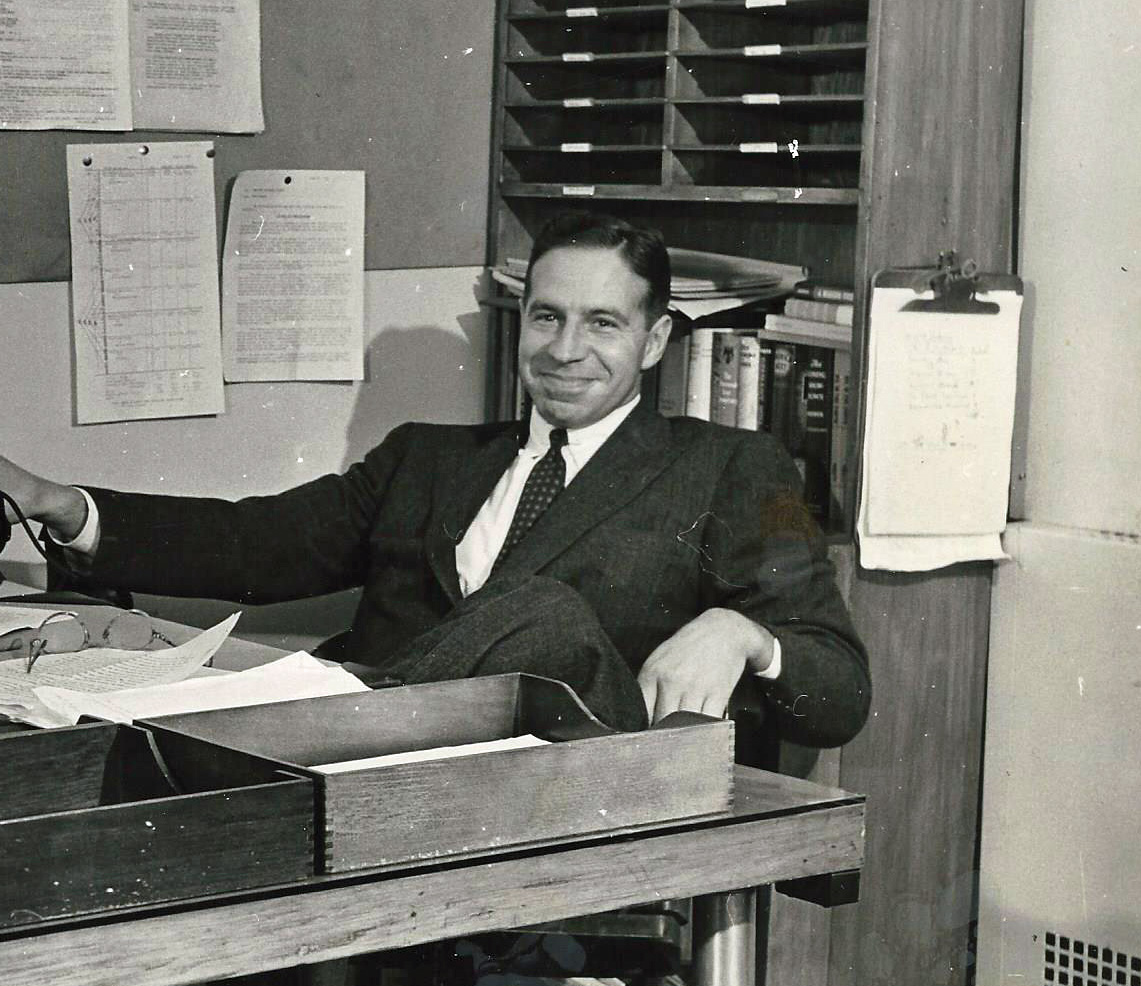
Ralph Delahaye “Del” Paine Jr. in the FORTUNE years
To reiterate, Fortune is one of the publications in which the Koch’s have acquired an ownership interest.  Here is what Galbraith wrote about my uncle and the time he spent working under him at Fortune:
IN TRIBUTE TO DEL PAINE

I read in January of the death of Ralph Delahaye “Del” Paine Jr., who was editor and managing editor of FORTUNE from 1941 to 1953 and publisher from 1953 to 1967. I share with the present editors and the readers of FORTUNE my admiration and affection for a truly notable and much-loved figure in the history of journalism.

In the autumn of 1943 I joined the editorial staff of FORTUNE. I was never more content. Gathered under Paine was perhaps the most remarkable community of writers ever brought together on one magazine. Archibald McLeish, Dwight McDonald, and James Agee had but recently departed. The inimitable Eric Hodges of Blandings fame, Wilder Hobson, and the Davenport brothers, Gilbert Burke, and others were very much present. All were young; all shared an unqualified respect and affection for our young editor, then in his mid-30s.

With some exceptions we were by the standards of the time dangerously to the left. For some, like Dwight McDonald, Marx was a far from irrelevant figure. More generally, the New Deal was seen as an essential design for escaping the widespread economic devastation of the Great Depression. It was Del’s task to make us reasonably acceptable to our business readers.

This heated with intelligence, tact, and charm.  He was assisted by the thoughtful view, strongly supported by Henry R. Luce, that businessmen would rather read well-written, interesting, politically debatable articles with pleasure and comprehension then basically unintelligible prose with which they might agree. The acceptability, even prestige, of the magazine affirmed the rightness of this view.       

JOHN KENNETH GALBRAITH
Cambridge Massachusetts
The letter, clipped from Fortune, hangs in my mother’s hall.  I’d like to think that when John Kenneth Galbraith himself died in 2006 my mother returned the favor by writing to Galbraith’s family, his four sons included, to recollect some of the flattering things my uncle had to say about Galbraith, but I am not sure that happened.
John Kenneth Galbraith was not just a famed economist and writer; he was also a member of John F. Kennedy’s administration serving formally under Kennedy as ambassador to India.  The other day I was listening to John Kenneth Galbraith’s son, James K. Galbraith, explaining how Kennedy involved his father to support him in his efforts to pull out of the Vietnam War.  James K. Galbraith is an economist and writer like his father who teaches as a professor at the University of Texas.  The discussion was on Austin’s KUT public radio station program Views and Brews hosted by Rebecca McInroy and he was speaking with Dr. John Newman, a retired U.S. Army Intelligence Officer and historian, about his book “JFK and Vietnam.”  (V&B: JFK and Vietnam – What We Know & Why It Matters, May 18, 2017.  You may want to save this link if you want to find this talk again: Google’s algorithm doesn’t have this showing up quickly making it hard to find.)
   
Ultimately influential, Dr. Newman’s book documents with first-hand research evidence of JFK’s decision to withdraw from Vietnam just before he was assassinated, confirming and fleshing out accounts that the senior Galbraith shared with his son James.  That book championed by James Galbraith is as of now recently available, but it was published 26 years prior only to be suppressed and pulled from bookstore shelves by its publisher.  That was despite the book's being reviewed on the front page of the New York Times Book Review Section by Kennedy special assistant and historian Arthur Schlesinger, Jr. who also said "This commanding essay in critical history is the most authoritative account anywhere of President Kennedy's Vietnam policy and it is fascinating reading as well." Plus it was endorsed by former CIA head William Colby.

When the NSA failed to stop the book with unsuccessful claims its information was classified the publisher cooperatively made the book unavailable anyway.  That is another example of why who owns the media is so critically influential what the public hears or reads about.  Similarly, after 9/11 Michael Moore’s publisher was going to pulp, unpublished, a book it had printed that it felt was too critical of George W. Bush.  When that book was rescued by a librarian leading comrades it became a bestseller.

The KUT discussion was months prior to the release this year of Ken Burns’ “The Vietnam War” on PBS, but Galbraith and Newman already knew and were dismayed that the Burns 18 hour documentary left out of its narrative any reference to Kennedy’s likely withdrawal plans.  Another similar failure of the Burns documentary, at least in tone, that I found jarring is that while it covered the assassination of Martin Luther King, Jr. as a relevant major national event, the documentary, epically focused on Vietnam as its subject, didn’t note the incredibly strange resonance that King’s April 4, 1968 assassination was on the one-year anniversary of King’s historically pivotal April 4, 1967 Riverside Church denunciation of the War.

It is interesting to review what is and is not deemed acceptable to express as the events of history re-contour the landscape around us.  A lot of what gets said has to do with who are the gatekeeping owners and sponsors of our media.

I just recently rewatched on Turner Classic Movies the film “Seven Days In May” about an attempted military takeover of the United States Government.  The film was made from a novel of the same name published in 1962 written by Fletcher Knebel and Charles W. Bailey II, political journalists familiar with Washington D.C. who researched their subject.  The film was made with help, assistance and encouragement from the Kennedy administration, Kennedy reputedly believing it depicted threats that were real at the time.  It was due for release in December 1963, which would have been just days after Kennedy’s November 22, 1963 assassination.  Because of the assassination, release of the film was delayed until mid-February of 1964.

There are rumors that, after the Kennedy assassination, Frank Sinatra pulled from circulation director John Frankenheimer’s already released (October 1962) previous film, “The Manchurian Candidate,” explicitly about a conspiracy orchestrating a political assassination in order to takeover the U.S. presidency.  Even if the film wasn’t widely shown for a time after the assassination, according to Wikiepdia, those rumors have been disproved, and, additionally, the film was apparently revived at a cinema in Brooklyn, New York two months after the assassination.

Nevertheless, it is said that the Kennedy assassination also affected what was ultimately the content of Dr. Stangelove, another film released soon after the assassination, at the end of January 1964.  The film was a satire about strategies of “Mutual Assured Destruction” (MAD) devolving into nuclear Armageddon. Stanley Kubrick, the director, had filmed a War Room pie fight to end the film, “the best pie fight ever filmed.”  However, the pie fight seemed tone deaf after Kennedy’s killing, including a portion where George C. Scott’s character General Buck Turgidson holding in his arms a pie-stricken U.S. president played by Peter Sellers as president says:
Gentlemen, our beloved president has been infamously struck down by a pie in the prime of his life! Are we going to let that happen? Massive retaliation! 
The scene reportedly got as far as a test screening that occurred right around the time of the actual assassination.  More likely Kubrick would have sacrificed the scene anyway realizing that no matter how technically executed it may have been it did not sync properly with the film’s satire.  In addition, according to its screenwriter, Terry Southern, studio executives were apparently skeptical of the scene from the beginning plus they were beginning to turn on the film and disavow it as ‘un-American” or “anti-military.”

Monday, September 10, 1962, evaluating the book “Seven Days in Maybefore Kennedy’s assassination and before the movie was made, New York Times reviewer Orville Prescott started out by putting it in the genre of  Sinclair Lewis’ “ironically” titled "It Can't Happen Here."   He noted that the authors “are both experienced newspaper men. .  Both employed in the Washington bureau of the Cowels publication and judged by this book, they view the course of future events with considerable alarm and [t]hat they know much about the Washington scene, the routine life inside the White House and inside the Pentagon.”   Prescott, however, offers no rousing endorsement of the book concluding that with “stock characters” the prose does not “make the most of” its plot coming across like a “parlor game” that “as a whole never seems real.”  Acknowledging that it is scheduled to become a movie Prescott offers that “it ought to make a better movie than it is a novel.” Notwithstanding, the novel was a bestseller with an appreciable run.

Returning to mention the novel in his writing again a few weeks later about “Fail-Safe,” like “Strangelove” dealing with the specter of nuclear Armageddon (October 24, 1962), Prescott commented that “according to several of this autumn's new novels, the near future is going to be even more unpleasant than most of us sensible pessimists expect.”  While Prescott opines that “Fail-Safe” “cannot fail to chill the spinal columns of its readers,” and his verdict is that it was a “slam-bang thriller” despite its “deficiencies as fiction,” he concludes, much like he did with the novel “Seven Days in May,” that the authors “have no gift whatever for characterization” the “prose is commonplace” and the “dramatization . . crude and mechanical.”   Again, the novel was, nevertheless, a bestseller.  He does credit the authors for having done “considerable research assembling declassified material” and with basing the novel on a real incident. 

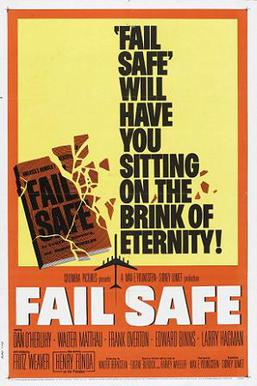
“Fail-Safe” too became a film, coming out after, but on the heels of  “Dr. Strangelove” (October 7, 1964).  The film, although a drama rather than comedic, was so similar to “Strangelove” that “Strangelove” director Kubrick filed a copyright infringement lawsuit against it (both were Columbia Studio pictures), settling that suit based on an agreement that “Fail-Safe” would come out after his film.  The devastating nature of the Kubrick comedy probably severely undermined and helped account for the poor performance of “Fail-Safe” at the box-office.
             
The New York Times Bosley Crowther review of the film “Seven Days in May” necessarily came out after the Kennedy assassination.  Under those circumstances, the “suffering cats and little kittens!” exclamation accompanied lead-in of the review dealing with a film about “not too farfetched speculations” seems oddly lighthearted.  (Does that translate to “farfetched”, but not toofarfetched”?)  To wit:
It's beginning to look us though the movies are out to scare us all to death with dire and daring speculations on what might happen, any day in Washington.

First we had "Dr. Strangelove or: How I Learned to Stop Worrying and Love the Bomb," . .  .  Now, . . . we are offered a similarly fearsome prospect of the crisis that might occur if another Air Force general planned to seize control of the Government.

. . .  One might ask what we're coming to if such shocking thoughts are penetrating the deep domes of Hollywood!
Rod Serling
Crowther credits that the film “gathers a sense of actuality and plausibility.”  Actually, the script was obviously written with great seriousness by Rod Serling, of his very best.  It has none the `this-is-fantasy' or `this-is-speculation' veneer with which Serling avoided censorship with his Twilight Zone scripts.   Many of the Twilight Zone scripts Serling wrote were trenchantly antiwar.  By creating that science fiction fantasy anthology series Serling, sorely vexed by censorship, mainly from television sponsors, but not always just sponsors, side-stepped such censorship (a clever ruse?).

Crowther praises Serling for one sentiment expressed by the film’s fictional president, played by Frederick March, who says that the enemy is not the general, but the nuclear age: “It happens to have killed man's faith in his ability to influence what happens to him.”  To me (at least in 2017) incorporation of the sentiment that Serling apparently recycled from the original novel rang hollow.  The film as praised by Crowther and others is safe for its audiences, and perhaps for the larger world of the-powers-that-be, in that it hopefully holds out democracy, its institutions, the constitution, and basic human decency as strong enough to triumph.  And it also sticks with the idea that the mutinous generals, still principled, just have a different calculation of what to do in face of their fear of nuclear weapons. . .

. . . What the film never offers is any idea of how the money side of armaments can perpetuate their continuation and even use.

“Seven Days in May,” like “Strangelove” and “Fail-Safe,” is also about the balance of terror with Russian as a threat and the potential for worldwide nuclear holocaust.  A plot point of analysis is whether the U.S. military coup, if successful, would have provoked the Russian attack the generals wanted to forfend against.  Similar to how Crowther couches his praise for “Seven Days in May,” “Fail-Safe” is sometimes praised as a superior to “Strangelove’s” treatment of the same subject matter for being more soberly adult or mature, because it launches its speculative disaster scenario from the presumption of good intentions on the part of those in the military industrial complex.

Crowther’s review of “Seven Days in May,” says that the `plausibility’ of the plot (which takes place in what was then the future- May 1974) does not extend to “one twist,” which is the supposition of a large secret military base- some 3000+ men- in El Paso, Texas.  Next to the Mexican border El Paso is the actual location of Fort Bliss, one of the largest military complexes of the United States Army and very active in recent years as the largest training area in the United States, plus the home of other security facilities.  It is the home of one of the privately-owned ICE immigrant detention centers about which the public knows little these days even as these private ICE centers operate outside most conventional laws and the United States and ICE funding and private ownership of ICE centers is increasing dramatically.  If “Seven Days in May” was remade in another update, the takeover of the government would not be by the military, but by an even less accountable joint operation between the military and the mercenary corporations the military industrial surveillance complex now contracts out to.

When it comes to the military industrial surveillance complex interesting questions can be raised about what one can write about.  That is certainly the topic of director Steven Spielberg’s new “The Post” film concerning publication of the Pentagon Papers that documented decades of lies by the U.S. government about the Vietnam War (to get back to one of original subjects), which the government enjoined the New York Times from publishing as a violation of the espionage act.  The papers were copied and furnished by  Daniel Ellsberg a United States military analyst employed by the RAND Corporation at the time.

That was Daniel Ellberg’s role then.  Ellsberg is only now, with his new book “The Doomsday Machine: Confessions of a Nuclear War Planner” detailing information from his “top-secret nuclear studies, his front row seat to the Cuban missile crisis” (the crisis that helped set the national consciousness for the nuclear war subject films discussed here) when Ellsberg was a consultant with the Pentagon and the White House.  According to his account, Ellberg himself drafted plans for nuclear war and was privy to plans for nuclear war that were “insane” and “evil” in the hundreds of millions of people that would have been killed world-wide.


The question of what one theoretically can and cannot publish about the military can be interesting. 
"Red Alert"- Original title
The book “Red Alert” from which “Dr. Strangelove” was made was published in 1958 in the United Kingdom.   It was written by Peter George, an ex-RAF intelligence officer under the pseudonym Peter Bryant.  The later more popular “Fail-Safe” was published in the United States.  Terry Southern, screenwriter for “Strangelove,” asserts that because “national security regulations in England, concerning what could and could not be published, were extremely lax by American standards” George was able to “reveal details concerning the `fail-safe’ aspect of nuclear deterrence . . . that, in the spy-crazy U.S.A. of the Cold War era, would have been downright treasonous” and thus give all the “complicated technology of nuclear deterrence in Dr Strangelove” a base “on a bedrock of authenticity” that gave the satirical film the strength of credibility.

Keeping the military’s secrets about the potentially absurd destruction of the entire world at its hands is one thing.  Avoiding the more omnipresent censoring influences of commercial interests is another.  Rod Serling bridled at the censorship that emanated from the TV sponsors who readily rankled at the slightest hint of anything in a script that could `threaten’ corporate profits: For instance, Serling told of how the line, “Got a match?” had to be eliminated from the script of “Requiem for a Heavyweight” because the sponsor of the show as Ronson Lighters, and how the Chrysler Building had to be painted out of the New York skyline of a show that was sponsored by Ford Motor Company.

In this day and age of merging conglomerates the heavy hand of commercialism is more consequential with one the most overriding humankind-destroying concerns being that climate change misses getting reported on, almost as if it were a classified secret itself.   Because that reporting would affects profits; Not because we are afraid of the Russians.

It is one thing that the Kochs and fossil fuel companies spend phenomenal amounts of money to spread misinformation about climate change.  We moreover have to deal with how in 2016, the year of the national presidential elections, already scant reporting of climate change was reduced drastically and questions about climate change were left out of the presidential debates.  In 2017 the national networks and corporate media managed to report on extraordinary hurricanes and massive wildfires continually breaking records without mentioning climate change.

And now, as the Kochs acquire their ownership interest in Time Inc. we, like former Time editor Charles Alexander, must worry that what is motivating the Kochs is their desire to have the public see even fewer references to climate change and its world-destroying implications.  As media ownership concentrates overall throughout the country we may similarly worry that we will achieve less insight and learn less about what we need to know concerning the current day equivalents of the Vietnam War as well as all the things that the military industrial surveillance complex is up to that we would want to know more about.  .  .

.  .  As much of the discussion here makes evident, media in our culture is an all enveloping cocoon.  What does or does not get through in the way of ideas and possibilities because of who owns or sponsors that media affects our thinking mightily.

Although not perfect, Time magazine may have produced good climate change reporting and Fortune may have been, for its era, to the left in reporting economic matters, but with more and more of the kind of events we see represented by the Koch's Time Inc. ownership acquisition, we are moving ever further away from the the balance we had in the media then, whatever it was and such as it might have been.