Showing posts with label Media Consolidation. Show all posts

Saturday, April 1, 2023

Amy Goodman, of Democracy Now, And Rachel Maddow, of MSNBC’s The Rachel Maddow Show, In Talks About Merging Their Broadcasts

Amy Goodman left, Rachel Maddow right

It’s not like `continental drift’ although there is a `drift’ to be gotten, . . . and it is drift on a truly monumental scale.  People talk about `watching grass grow’ or ‘watching paint dry’ when they talk about things happening slowly so as to go unnoticed.  `A watched pot doesn’t boil,’ but when your tea kettle starts whistling, you know that something’s happened.
These are the words of Democracy Now’s Amy Goodman letting the cat out of the bag about her talks with Rachel Maddow about merging their shows based on the things they increasingly have more in common.  Goodman seems very happy to be the one giving the exclusive `cat out of the bag’- or is it `trial balloon’?- interview.

“Look,” says Goodman, “change is part of life.”  Goodman seems more relaxed than usual, as though allowing herself to wax philosophically this way is allowing her to speak her thoughts more truthfully in a liberating way.  She continues:
Yes, change is part of life.  It was when Rachel was doing Air America radio with Al Franken as a “left–wing,” albeit poorly funded, counter to the likes of Rush Limbaugh, that people got to know who she is.  That was then. [2004] Now she, like us, has regular headlines that track well with the lead you can get from the New York Times.  Rachel, us, and also pretty dependably the New York Times, we’re true blue behind the powerful narratives of the Democratic Party. When I say that those narratives are powerful, I don’t mean that they are inspiring or attuned to the populace, or to the directions for leadership our populace may yearn and hunger for, what I mean is the power of Democratic party coming from the corporations that the party aligns with and, of course, coming from Wall Street.  It’s those alignments that give the selective narratives of the party extraordinary force as they are deployed and can be insisted on.  And I am very happy about the whole identity politics thing.
If, with some migration of platforms, Democracy Now and the Maddow show are going to merge, the reason for their discussion of the possibility is the growing commonality of themes.

Goodman points out that the nation’s had an era where the awfulness of Donald Trump made it easy to find common ground, “I mean Donald Trump’s awfulness was so important, that you didn’t need to pay attention to really anything else.”  And, she points out there have been a lot of things tying into Donald Trump’s awfulness that were consequently easy to agree on: Russiagate and the way that Russians are nefariously interfering to make this country worse and make Trump more dangerous, January 6th and the way we have to stop insurrectionists from taking away our democracy, which we are realizing really needs to be revered (“January 6th sort of taught me that word `insurrectionist’ and got me thinking about it, before then I doubt I’d thought to know what it meant– did you know it’s right out of the constitution?- Though no law under it yet”- interjects Goodman parenthetically), the way we have to censor hate speech (including anything an insurrectionist or any of those election deniers might have to say, and then there’s need to regulate speech in our social media Town Squares so that people don’t get depressed by conversational downers.

Goodman sips her green tea and goes on: “Rachel is very much against hate speech,” she says, “she’s a firm counter the bad kind of hate speech we both deplore.”  Blowing on her tea, she continues:
We are also aligned by being both on the right side of those divisive cultural issues that the Trump presidency made even easier to checklist for future segment coverage.  Thank God Trump changed his position on abortion, thankfully 180 degrees, before taking on his role as a supremely obnoxious president, otherwise it could have been confusing!

We were also both perfectly aligned on the Covid narrative thing: "Wear a mask, wear two masks," we told our Democracy Now audience, "it’s an act of love.'  (We didn’t get to adding the eye visor thing, but thought about it.- Oh maybe we did)  While Rachel was beautifully firm and emphatic: "Now we know that the vaccines work well enough that the virus stops with every vaccinated person."!

The whole Covid thing, the crazy need for lock-downs meant there were a lot of fearful things, numbers and statistics to tumble out before the public in a stream; for a while Democracy Now even changed its mantra slogan from "the war and peace report? to the "quarantine report."  When it comes to history and wars waged, history, when it doesn’t repeat itself, at least rhymes.

But that Covid fear and what to do about it, that’s another thing where we both agreed about how important it was to be saying the right thing and make sure that people were not allowed to say the wrong thing– That Joe Rogan! Talk about people who need to be stopped in their tracks with a dose of good old healthy censorship and centrally managed social opprobrium- Imagine saying good things about the `horse paste’ Ivermectin,

 Mentioning Rogan and Ivermectin Goodman wrinkles her nose in disgust.


“We still have significant differences, Rachel’s show and mine”
says Goodman, “so I don’t know where that takes us.”

She mulls:
Rachel is more provincial, addressing herself more specifically to what riles Americans living locally in this country, more specifically, her kind of Americans.  Democracy Now has an increasingly worldwide audience and worldwide sensibility, for instance, Rachel hasn’t caught up to match me with things like my guttural pronunciations, like when I say“Afghanistan,” or introduce my co-host Nermeen Shaikh.  It just isn’t her style, and we can’t expect it.

But Democracy Now can’t leave its worldwide audience behind it.  If this thing is going to happen, we have to take that worldwide audience along with us in the merger.  We at Democracy Now, also spend more time feeling for the victims in this world, which is not exactly the way Rachel likes to keep the energy up, especially when those victims come from far-flung places in the world that Americans have rarely heard of.  When the time comes, we at Democracy Now are better positioned to do truly convincing ‘worthy victim’ stories.

Some things are going to be very problematic.  Democracy Now was originated out of, was incubated out of WBAI, out of the Pacific network of station.  We are still carried on that family of stations, still with a reasonably hefty listenership.  We’ve established ourselves and Pacifica has cast its lot reporting, with a fair amount of honesty, about the Israeli state’s vile and horrendous treatment of Palestinians.  That honesty, on our part and many other Pacifica carried programs, has been determinative in the loss of a certain appreciable amount of funding for Pacifica.  Unlike perhaps some other things, that’s something where we can’t now leave our audience behind by backtracking or denying our core DNA. . .

    . .  But you can imagine what a problem this would be for Rachel.  Even if our meld is only accomplished by doing back-to-back shows that could be a toxic proximity for her.  The solution, if the time comes, may be to take our cue from her.  She deep-sixes those kinds of stories and that kind of reporting.  So you also don’t hear anything about our U.S. Saudi Yemen war from her.— Out of sight is out of mind.  What we could do, and might do, is just move all of out Israel/Palestine reporting and coverage to our web edition special section.  There it would be invisible to the kind of audience that never looks for that kind of thing and justifiably still there for the kind of audience that still does.  You know we are all in our individual bubbles these days.  So you always have to remember to think in those terms.
It causes Goodman to sigh.
But merging these shows is meant to take us counter to that bubble thing.  Instead of isolating bubble thinking, we’ll have more people thinking the same things when we get our shows together.  But we can’t move too fast.  Our audience has to move with us.  We do polling and focus groups to make sure we don’t get too far out in front of them.  We are alert for feedback.  And, for instance, at Democracy Now we’ve recently had to go back and do some stories to illustrate that we are still anti-war and ant-US imperialism, like what’s expected of us from our past.   Like, for instance, with that particular segment of the audience that still listens to us on Pacifica stations, those we haven’t yet pulled away to listen to us just through the disintermediation of our multiple internet platforms, it can a bit jarring right now if our content is too different from other Pacifica shows.

We want to be on the same page with Rachel and crew about things like the Ukraine war
, [Goodman catches herself and doubles back]. .  The `Russian provoked’ Ukraine war, [she emphasizes], but our audience can get a little unnerved by the idea we are on the brink of possible nuclear annihilation of the world and wonder if we really are still sincerely for peace enough if we are to expect them to keep following us where we go. An easy way to offer reassurance, like we just did, is to use the 20th anniversary of the Iraq war, ahem, U.S. invasion of Iraq, and reiterate where we stood on that twenty years ago.  The past is a place where you can anchor the trust you hope to keep getting  in the future.  So people will keep following into whatever Heraclitian storms may toss us on the waves in that future.

Look, I believe that `in solidarity there is strength.’  For progressivism to win, we have to be rowing in the same direction.  When we marched into wars, the Democrats were once thought of as the anti-war party.  Now we have two war parties, but it’s clear that the Democrats are now taking the lead.  The Republicans have a few isolationists who are against our bringing democracy-enhancing regime change to other countries. . .  The name of our show is Democracy Now, something to remember, when we try to keep our bearings.
The interview can’t end without posing one obvious question: Why not PBS or NPR instead?  Goodman smiles, shaking her head as if disappointed with the quality or lack of perspicacity of such a question, even if it might be obligatory and expected as inevitable.  Goodman speaks slowly and deliberately:
Merging our audience with PBS or NPR wouldn’t be any kind of achievement.  PBS and NPR are already where Rachel and her show are, which is to say, aligned with The Washington Post and New York Times, but PBS and NPR are selling the audience the idea that they are the thinking man’s version and the cultured man’s of media consumption.  That pose already successfully siphons audience, say from Pacifica, when the audience is looking for better production values along not so obvious and time-consuming commercials that you get with `commercial’ broadcasts.  But sliding over there wouldn’t be an achievement.  Because it’s sort of contrary to their brand, PBS and NPR don’t fish for audience indignation, including the Red Team, Blue Team variety of indignation, the way that Rachel and I do,– not so overtly–  Rachel does it with her raised-to-the-sky eyebrow and cocked neck, while I put it in my voice.  I can do it with slight variations in my tone and I also pick words to drawl out more slowly.  Moreover, we at Democracy Now do subtle, not quite subliminal, editorializing with our interspersed music segments, something Rachel doesn’t do.  Bringing our audience to MSNBC with skillful drifting would be a much more real achievement.      
One last question to Goodman (but is it too rude?): And the true “achievement” to be aspired to might also be inextricably associated with handsome recompense?— Doesn’t Rachel Maddow get paid something like $30 million a year counting salary and regular bonuses?  Goodman simply smiles.

Democracy Now and The Rachel Maddow Show are not merging broadcasts just yet.  This April 1st interview with Goodman was just to preview how it’s being talked about.  Goodman was specific that if it happens it could be a year from now, say next April 1st, or two years from now on the April 1st after that.


Thursday, April 1, 2021

PBS And The Muppets To Partner With The Wall Street Journal And HBO To Bring More Content To The Public With The Launch Of Its PBS “Passport Two” Service

Bill Maher interviewed Elmo the Muppet about the new Passport Two service partnership, PBS, HBO, the Muppets and the Wall Street Journal

Something new is coming!  A more better version of Public Broadcasting in the form of PBS’s new “Passport Two” access.

It’s been six years since PBS and all its member stations launched its “freemium” Passport service, a new membership streaming service in order to do a better job at, and bring more of its Public Broadcasting Station content to the public by providing video-on-demand to members of the public paying a subscriber’s fee.  (See: PBS Passport serves up on-demand content for public TV’s members, by Jill Goldsmith, Contributing Editor,  December 15, 2015.)

Also, at that time, in a parallel move, PBS’s Muppets inked another “freemium” deal with HBO to help bring more and better Muppet content to public broadcasting.  (See: Sesame Street Is Moving To HBO In 5-Year Deal That Will Give PBS Free Episodes, by Lynn Elber, August 13, 2015)–   Point of fact- It’s actually not correct to say it’s “PBS’s Muppets”: Though long closely associated with PBS and although Big Bird testified before Congress to protect PBS funding, PBS having been the network through which the Muppets became universally identified as the children educating, family friendly and very amusing puppets that they are, PBS does not actually own the Muppets.– The deal inked with HBO allowed the subscribers of HBO’s premium services to see newly made Muppet episodes first and then let HBO pass the episodes along for rerun on PBS air after a nine-month exclusivity window.  (See: Sesame Street's move to HBO, explained, by Emily VanDerWerff, January 16, 2016)

With the launch of its original Passport service in 2015, PBS leapt into “the age of on-demand viewing” and aimed:

to deliver a one-two punch that will dazzle station donors with significant upgrades to their digital viewing experiences. Executives also hope the new service will entice younger viewers to watch more public TV programs and become members.
Now, with new partnerships, and a pivotal partnership with the Wall Street Journal, PBS and the Muppets collaborating together will be launching their new Passport Two service to deliver more of that “one-two punch.”  It’s obviously important since digital on-demand streaming is the obvious future, the destiny that is fast replacing what used to be watched as regular television.  The freemium availability of extensive PBS content only to those who are donating as subscribers is an obvious update of traditional station contributor perks: As was noted, in 2015 when Passport was launched, “an ecstatic Daniel Greenberg, chief digital officer at New York City’s WNET, a station that piloted Passport” said that this freemium availability of the extensive PBS content only available to viewers who donate should be seen as “a contemporary version of the tote bag.”


With the help and involvement of the Wall Street Journal PBS and the Muppets will be able to produce much higher quality, better informed, and better sourced content.  Among the offerings will be upgraded nightly news programs and a regular new stock market program on the days the stock market is open.  Passport Two subscribers will be able to see the news programs live and on demand anytime thereafter.  Station contributors who continue as regular Passport station members will be able to see the news the next morning after a twelve-hour window.  News programs will be available on the air for any and all members of the public twenty-four hours after origination.  During elections, Passport Two will adhere to a generous practice now already followed by the Wall Street Journal: News content about the elections and providing people with insight and information about how they should vote will be open and supplied to all immediately.

The partnership with the Wall Street Journal is expected to bring in many new members and high donation contributors, luring them in from the Wall Street Journal’s reader base and from Wall Street and financial industry in general.  To make sure that Passport Two gets a good kick off in this regard, anyone who has paid steadily to get behind the Wall Street Journal’s paywall over the past two years will automatically be gifted a year and half of Passport Two access.  This will enure that insider conversation gets Passport Two talked about and paid attention to by those who swing power.                 

Passport Two will most times go by the simple, sweet, short name of “Passport Two,” but various times and in the smaller print on the logo for the service it will be more fully inclusive of its entire official name: “Passport Two- PBS/WSJ.”   Mr. P. Rite Gold of the Wall Street Journal said that the initials “WSJ” should implicitly be understood to represent the Wall Street Journal and its involvement, but that they would also, in the context of Passport Two, be promoting “WSJ” to mean “Wellness and Social Justice,” a focal mission of the service.

Passport Two logo- "WSJ"= "Wall Street Journal" and "Wellness and Social Justice"


Concept and design plans for the Passport Two service were developed with seed money from the Wallace and Pace Summer Foundation.  Wally Summer Jr, who now heads that foundation said that denizens of Wall Street would definitely understand the intended Passport Two set up without any problem.  Summer said that on Wall Street, where everyone is welcome to invest, the value of timely information and the ability to act on it quickly is well understood.  That was why, he said, Wall Street firms were willing to pay exorbitantly for computers with downtown Manhattan locations whose connection would be micro-seconds closer to the Wall Street stock exchange in order to be able to execute trades faster.

How do Sesame Street and the Muppets benefit from the new Passport Two partnerships?  To answer that question, Elmo went on HBO’s Real Time with Bill Maher to engage in a charming interview with Bill Maher about what Passport Two will mean for the future of educating and communicating with kids.

Elmo explained to Maher that some of the new Muppet Passport Two productions will slant upwards to start taking in a somewhat maturing juvenile audience that’s more capable of absorbing the kind of content that Wall Street Journal has extraordinary mastery of.  To this end, Sesame Street’s Muppets world will introduce a new character, Alfalfa, whose most distinguishing  characteristic will be his funny pubescent Muppet voice crack. (The Muppets recently acquired the rights of the Hal Roach Studio “Our Gang,” “Little Rascal” films from ViacomCBS and Sonar Entertainment.  That means the Little Rascals are now also indirectly owned by Disney, which acquired the Muppets in February of 2004.  Muppeteer Jim Henson, their creator, died May of 1990.)

Elmo told Maher that, echoing a little of the approach of the defunct My Weekly Reader of the days of yore, new Muppet shorts would be produced to make juveniles aware of, and conversant with, current world events and educate them about civics issues.  Elmo said that a segment was in the works titled, “Why We Should Go To War With Iran” and there was a related short feature involving a cartoon yellow submarine titled “How We Can Go To War With Iran.”  Several editors from the WSJ editorial page are volunteering their time to contribute ideas.  One short segment, focused on civics, completed with the help of the editors is already complete: “Why A Socialist Venezuela Threatens American Values.”   
 

In his interview Elmo told Bill Maher about the cartoon segment using a submarine to teach about relationships with Iran

Chuckling, Maher responded, “You Tickle me, Elmo,” an obvious indication that Maher’s Covid era challenged writers are not up to producing their best material right now.  Contributing, statements for HBO to a press release announcing Passport Two, Maher said, “HBO’s willingness to join with the Muppets, the Wall Street Journal and PBS provides a firm answer, a resounding negative answer to the question (See: Will AT&T Be Able to Handle HBO? By John Koblin, June 14, 2018) of whether ATT’s 2018 acquisition of HBO and Time Warner would result in detrimental changes to HBO.

Maher’s press release statements asserted that with the media corporation “Game of Thrones” style wars competing for complete content dominance, ATT had been anonpassive corporate parent insisting that HBO must get bigger and broader.” Thus, “yes,” he said, with the acquisition “there have been changes” and “HBO has been developing less expensive, shorter length content suitable for the modern era of today’s challenged attention spans,” but that “those changes have all been good.”

PBS says that it is not the only charity participating in the Passport Two paywall project, that PBS’s own participation had induced additional partners to be included, particularly an expansion of HBO’s recent partnerships with libraries around the country that includes NYPL, the New York Public Library, and the Brooklyn Public Library.  (See: New York Public Library and HBO Partner, by Gary Price on May 29, 2018 and Brooklyn Public Library Partners With HBO To Promote HBO Subscription Content Offering “My Brilliant Friend-  “The Blue Fairy”, April, 2020)      

Explaining the Passport Two participation partnership to the NYPL trustees, NYPL president Tony Marx said “HBO is providing some great video talent” and it is providing that “great video talent” just when it’s going to be ever more important for the internet streaming and internet digital availability that, like Covid, is ushering us away from books and physical libraries.  Brooklyn Public Library spokesperson Les Izmur, said the BPL heartily agreed.

The new CEO of HBO, Constance Ailes (daughter of Roger who died in May of 2017), who was recently hired by HBO president John K. Billock to replace former CEO Richard Plepler, says HBO is jubilant about its partnering with the libraries:  “The libraries are repositories of so many stories no longer subject to copyright that, through creative retelling, we can make our own so that Passport Two will be an ever more essential part of life.”

Wally Summer of the Wallace and Pace Summer Foundation said that partnerships like these are so important to ensure that PBS will continue to be commercial free.  He noted that these partnerships were even more fruitful in that regard in that Disney, as a proud nonpassive corporate parent was pumping even more money into the Passport Two partnerships than the Muppet episodes were costing.”  In recognition of this, PBS will run sponsorship acknowledgment spots thanking Disney with brief clips from “The Mandalorian,” “Black Panther,” “Hamilton,” and “Avengers: Infinity War,” referencing Disney’s new Disney+ steaming service.

Passport Two will launch at an initial monthly fee of just $89.  However, in a public health and cross-cultural event supporting move, the Passport Two will promote `Passport’ awareness in general by initially offering Passport Two for the reduced cost of $29 monthly for those who have obtained Covid Passports, the proof that concert and cultural event goers are going to be getting that they have been double vaccinated in order to allow then be able to resume normal cultural activities like attending the Broadway Theater when it reopens.

Not all of PBS’s content will be run exclusively behind the Passport Two paywall for prescribed windows of time: PBS’s “Frontline,” regularly a joint venture with the New York Times will continue, as always, to be available to the public from the first date of publication.  Although it will continue to be free and available as before, it will now be available through the Passport Two apps as an enticement for Passport Two membership.  The New York Times, currently uses the freemium model of allowing a certain number of articles to be read free each month, after which a subscription to the Times is needed to be able to read more.  In contradistinction, the Times/PBS “Frontline” production however has always been entirely free, permanently posted on the internet except for one episode about Israel and the Palestinians in the Gaza Strip.

“Frontline” producers said that “Frontline’s” messages about how divided the American public is, making it impossible for our country to agree upon or effectively address issues, together with Frontline’s subtle appeals to the PBS intelligentsia in favor of war and interventionism were too valuable and important to put behind a paywall.  Times spokesperson Mimidae Passerine said that for the New Times to continue to lead the national dialogue, signaling and blessing the important narratives with what is referred to as The Times Effect,” it was the kind of propaganda that needed to get out immediately and unimpeded.

The Passport Two service launches today, the first day of April, April 1st.


Sunday, January 7, 2018

A Timeline of Reporting Dramas: Movies About Journalistic Coverage of Real Public Issues and Events

"The Post" vies for Academy awards in one delivered issue of the New York Times running a front page advertisement, plus a double page interior advertisement that appeared with a promotional interview of its stars, Streep and Hanks.
- *NOTE: Since the publication of this original post National Notice has published an updated list of films that includes, as one of its updates, “Shock and Awe.”  See: Time To Update Our Timeline Presenting Movies About Real Journalists Covering Real Public Issues and Events (To Include “Shock and Awe” and “Risk”), Sunday, July 15, 2018.-  
With Steven Spielberg’s “The Post” currently up and vying for Academy Awards, including Best Picture, and given the way that “The Post” ends with a scene denoting it as a prequel to the renowned “All The President’s Men” (1976), I thought it was time to gather a list of films that have been made  in either documentary fashion, or in dramatic form based on real reporting events that are about the subject of journalism. My interest was in films that are about the duties involved and the issues and decisions that the practice of journalism raises.  . . . I decided that it would be instructive to present them in timeline fashion, basing the timeline, not on the year that films were made, but upon the time period of the actual reporting of those events that took place.

Although I am not endorsing the accuracy with which any of these films convey history, I am including in my list only films that are about the ostensible reporting of ostensibly real events with particular interest in what made the decisions about such reporting dramatic at the time.

There are films that are inspired by real events and are great films about reporting, journalism and the newspaper business, but if those films are too highly fictionalized I am leaving them out.  “Citizen Kane,” (1941), inspired by the life of newspaper publisher `Citizen' William Randolph Hearst, is a great film and raises issues about what gets reported and with what sort of motives and sensationalism, but it is obviously highly fictionalized even if Hearst himself sought to smear/destroy its director Orson Wells and wanted the film destroyed (there is a dramatic HBO film precisely about that: “RKO 281" (1999).  Although my grandfather, Thomas Justin White, was General Manager and one-time president of the Hearst organization I don’t include “Citizen Kane” in the list.  (The film doesn’t happen include any character representing my grandfather).

Other great films on the subject of newspapers and journalism that don’t involve real journalists or real events include the versions of “Front Page” (1931 and 1974) and “His Girl Friday” (1940), “Broadcast News”  (1987), and the savage Paddy Chayefsky satire “Network” (1976).  “Mr. Smith Goes to Washington” (1939) has scenes key to the plot that depict how critical it is to a villainously corrupt political machine’s control of an unnamed western state for the machine to exercise a monopoly on the information with which newspapers and radio stations in the state supply its population.

I could perhaps arguably include three films that can be watched as a triptych: “Capote” (2005), “Infamous” (2006) and “In Cold Blood” (1967) as being about the death penalty and Truman Capote’s book.  I didn’t, and the last of those films, simply the film made from the book, doesn’t have Capote or a journalist as a character.

If journalism and its ethics is too remote from the central focus of the story (“The Killing Fields” 1984, “Salvador” 1986, and “Fear and Loathing in Las Vegas” 1998) I am not including films in my list, notwithstanding that real journalists are characters in the films.  Maybe I ought to be including “Live From Bagdad” an HBO film about CNN reporting (and yet one more film starring Michael Keaton as a journalist) or “Control Room” (2004, about Al Jazeera reporting, but I don’t know enough about them at the moment.

“Quiz Show” (1994) stands out as a delightfully fun film about a television network's deceit of the American public.  I am not including it since the famous deceit tsk-tsked by the film is with respect to the facts of the NBC television network’s own rigged game shows, rather than the reporting of the facts of important national events.  (It was based on events covered in a book “Prime Time and Misdemeanors: Investigating the 1950s TV Quiz Scandal A D.A.'s Account,” co-authored by Joseph Stone, and my mother-in-law’s boyfriend, Tim Yohn.)  However, a film that could be be made that would arguably make this list would be about another rigged NBC game show that in more recent times did not get tsk-tsked, “The Apprentice,” which helped a misrepresented featured participant, Donald Trump, go on to the U.S. presidency.  . . Yes, although fictional, "Broadcast News" and "Network" were both cautionary about the failure to distinguish news from entertainment, a failure that helped pave the way to Trump's becoming our distractor-in-chief.

Many of the films in my timeline feature whistle-blowers.  In many of the films people pay prices or are very much in danger of paying high prices, including ruined careers, prison or even loss of life, for reporting news the government or the otherwise powerful want to suppress.

There are shorter form, certainly informative documentaries I am not including like Frontline’s, “WikiSecrets,” about the release of alarming information about US military conduct by Bradley/Chelsea Manning through Julian Assange’s Wikileaks.  And, not included, Frontline has covered subjects about manipulation of the media by big and dirty corporate money seeking political manipulation in segments like: “Climate of Doubt” and “Big Sky, Big Money.”  . .  Also not included is an HBO recent 'documentary' about Washington Post editor Ben Bradlee, basically the audio-book version of Bradlee’s self-flattering autobiography with pictures, “The Newspaperman: The Life and Times of Ben Bradlee.”

I am also not including documentary films that are overall critiques about the failure of mainstream American corporate media in general to report reliably, such as “Project Censored the Movie” (2013) or “Outfoxed: Rupert Murdoch's War on Journalism” (2004) that offers a political view about the particular unreliability of Fox News.  I am not including such films even though their skepticism might undermine the sometimes rosy hopes that films in my chronological list sometimes offer about how it is envisioned mainstream media may do its job.

Here then is my list that presents a chronology in which you can see an evolution of what we have believed has been the role of journalists in reporting on the actual conflicts of our changing times.

    •    Good Night, and Good Luck (2005).  Set in 1953, during the early days of television broadcast journalism. Edward R. Murrow along with his CBS news team take a stand and take on the anti-communist fear mongering of  Senator Joseph McCarthy.

    •    All Governments Lie: Truth, Deception, and the Spirit of I.F. Stone (2016).  This film covers the legacy of investigative journalist I.F. Stone who died at 81 in 1989, who writing in his I.F. Stone Weekly (1953–71), reported about and during the eras of Joe McCarthy, Lyndon Johnson all the way to Ronald Reagan.  I. F. Stone's life and work, just a portion of the film, is the launching point to review many more recent government lies and their uncovering by journalists since.

    •   The Post (2017) and The Pentagon Papers (2003).  Both are dramas about the publication of the Pentagon Paper released by Daniel Ellsberg, who had worked on the study.  The papers were first brought to the attention of the public on the front page of The New York Times starting Sunday, June 13th, 1971.  The Washington Post began publishing its own series of articles based upon the Pentagon Papers on June 18, 1971.
    •    All The President’s Men (1976).  About the Washington Post’s coverage of the Watergate scandal.  The Watergate scandal began with the incident with which “The Post” ends: On June 17, 1972, security guard Frank Wills at the Watergate complex finds a door's bolt taped over so that it will not lock.
    •    Frost/Nixon (2008). Based on the David Frost interviews of Richard Nixon recorded and broadcast on television in four programs in 1977 in which Nixon climatically admitted his wrongdoing.
    •    Kill The Messenger (2014).   Based on the true story of journalist Gary Webb, the film takes place in the mid-1990s. Webb uncovered the CIA's role in importing cocaine into the U.S. to secretly fund the Nicaraguan Contra rebels through the manufacture and sale of drugs in the U.S.  Pressure to drop pursuit of his story Webb published his evidence in the series "Dark Alliance."  He then experienced a vicious smear campaign fueled by the CIA, during which he found himself defending his integrity, his career, his family, ending in his unfortunate death.  (This film somewhat oddly does not show up as readily when googling these subjects as the others do.)

    •    The Insider (1999).  About whistle-blower Jeffrey S. Wigand who became famous for his appearance in 1996 on the CBS news program 60 Minutes to reveal that the Brown & Williamson tobacco industry company had intentionally manipulated its tobacco blend with chemicals to increase the addictive effect of nicotine in cigarettes.  The film is about how CBS, with business motivations driving it, was suppressing the story while a smear campaign was conducted against Wigand, and about the ultimate involvement of the Wall Street Journal and New York Times in getting the story out.  Afterwards, in real life, the producer of the Wigand segment, Lowell Bergman, portrayed in the film by Al Pacino, went on to work for the New York Times, including working on collaborations with “Frontline.”
    •    Shattered Glass (2003).  A film about the embarrassment of how for three years until 1998 many of the humorous and entertaining articles that Stephen Glass wrote for the liberal magazine “The New Republic” were cobbled together from his multiple inventive fictions.

    •    Spotlight,” (2015).   It is based on a series of stories by the "Spotlight" team about the Catholic Church's concealment of its priests' sexual abuse of children that earned The Boston Globe the 2003 Pulitzer Prize for Public Service. (With news stories appearing from January 6, 2002 to December 14, 2002).

    •    Truth (2015).  This film is another about the CBS news program 60 Minutes.  It takes place in the months leading into the US 2004 presidential election (Bush v. Kerry) and tells the story about how CBS News anchor Dan Rather and others working for the CBS program were subject to criticism and lost their jobs for alleged liberal bias in reporting a basically true story about preferential treatment of George W. Bush in the National Guard (1968 to 1973 during which time Bush did not show up for a medical exam and stopped fulfilling his flying commitments) when it turned out that documents with which the newspeople had been supplied to support their story were likely faked in whole or in part by somebody.

    •    The Fifth Estate (2013), Underground: The Julian Assange Story (2012) We Steal Secrets: The Story of WikiLeaks (2013) Mediastan (2013) All of these films deal with Julian Asssange, the founding of Wikileaks (in 2006) and related events through 2010.  “Underground” covers the earliest period of Assange's life (the 1980s and 1990's pre-1997).

    •    Page One: Inside the New York Times (2011)  It deals with Times coverage of many things mostly during the time it was made, such as the 2008 bankruptcy of Tribune Media and The Afghan War documents leak, also called the Afghan War Diary, published by WikiLeaks in July 2010.

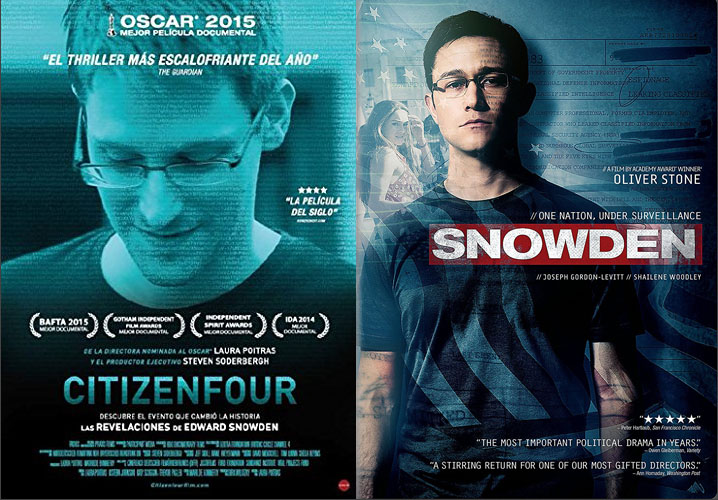
    •    Citizenfour (2014) and Snowden (2016). Respectively, first the film that won the Academy Award for best documentary and the subsequent Oliver Stone directed bio-pic that both cover Edward Snowden’s leaks to journalists of classified information from the National Security Agency (NSA) in 2013 concerning the extensive and illegal spying of the US government on U.S. citizens and on others around the world after the 9/11 attacks.

Sunday, December 31, 2017

As The Kochs Acquire Ownership of Time Inc.- More About Where On The Spectrum Of Left/Right Politics That Publishing Organization Was Once To Be Found Plus More About What Once Did and Didn’t Get Said/Published In The U.S. Media

As the Koch Brothers were stalking ownership of Time Inc., (the Time Life empire that includes the once mighty Time Magazine), I wrote here from a standpoint of somewhat unique personal experience about how, whatever we may worry that Time will become, subject to Koch influence, that Time Magazine was not exactly a very liberal magazine to begin with.  In the course of doing so, I wrote about my uncle, Ralph Delahaye Paine, a Time/Life man of significant stature in his time.  See: Kochs Move To Acquire Ownership In Time/Life, Which On The Political Spectrum Was Previously. . . (Let Me Tell You) - Our Media, Never In a Good Place, Shifts Toward. . ?? Friday, November 17, 2017.

Time Inc. currently publishes Time, Sports Illustrated, People, Fortune and Entertainment Weekly.

Since I last wrote, the Koch ownership acquisition has gone forward.  And since that time I have come across and had a chance to remember and think about a letter in praise of my uncle written after his death to Fortune magazine by revered economist and writer John Kenneth Galbraith.  It expressed Galbraith's opinion of where on the political spectrum Fortune magazine (not necessarily Time) was under the stewardship of my uncle: That Fortune was “with some exceptions . . . by the standards of the time dangerously to the left.”
   
The Koch acquisition of the interest in Time Inc. is reportedly causing consternation about Time’s editorial direction internally on the part of Time staff and one former Time editor, Charles Alexander has promulgated his worry that his 23-year of work at Time work will go "down the drain."  Although he admits that Time was a “conservative publication” under publisher Henry R. Luce with that “bias” persisting “for a long time after Luce’s death in 1967," Mr. Alexander points out Time Magazine’s important converge of climate change, a subject about which the Kochs, in the fossil fuel industry, have invested long and massively to spread disinformation about.

Jane Mayer, author of "Dark Money," about the Kochs and how they have built up their political machines and influence, obtained thoughts on the Koch Time Inc. investment from Emily Bell, a professor of professional practice at the Columbia University Graduate School of Journalism for an article in the New Yorker.  Bell said that she doubts that the Kochs have put six hundred and fifty million dollars into the purchase of a media company saddled with ailing print publications only for financial reasons: “It can’t just be the return on investment, because, if so, you’re in the wrong asset class,” she said.

When ownership of publications changes hands, It is not just the future slant of the publication that should be worried about.  Sometimes what had been published in the past vanishes or becomes less accessible.  That is what recently happened when the Gothamist, providing coverage of local New York City news, was acquired by an opinionated conservative Republican buyer.

That’s one reason why we need libraries.  Not everything is available on the internet; not everything remains on the internet.

One thing you can’t currently find on the internet is the letter, published in Fortune, that John Kenneth Galbraith wrote in tribute to my uncle Ralph Delahaye Paine after his death in January 1991.  In it, Galbraith expresses his view that the writing in Fortune magazine, under my uncle could be considered on the left for that day and age.  I can offer that Galbraith's assertion to balance out the observation I made when previously writing about the pending Koch investment in Time Inc. that Time magazine was not very liberal when reporting about the Vietnam War.
Ralph Delahaye “Del” Paine Jr. in the FORTUNE years
To reiterate, Fortune is one of the publications in which the Koch’s have acquired an ownership interest.  Here is what Galbraith wrote about my uncle and the time he spent working under him at Fortune:
IN TRIBUTE TO DEL PAINE

I read in January of the death of Ralph Delahaye “Del” Paine Jr., who was editor and managing editor of FORTUNE from 1941 to 1953 and publisher from 1953 to 1967. I share with the present editors and the readers of FORTUNE my admiration and affection for a truly notable and much-loved figure in the history of journalism.

In the autumn of 1943 I joined the editorial staff of FORTUNE. I was never more content. Gathered under Paine was perhaps the most remarkable community of writers ever brought together on one magazine. Archibald McLeish, Dwight McDonald, and James Agee had but recently departed. The inimitable Eric Hodges of Blandings fame, Wilder Hobson, and the Davenport brothers, Gilbert Burke, and others were very much present. All were young; all shared an unqualified respect and affection for our young editor, then in his mid-30s.

With some exceptions we were by the standards of the time dangerously to the left. For some, like Dwight McDonald, Marx was a far from irrelevant figure. More generally, the New Deal was seen as an essential design for escaping the widespread economic devastation of the Great Depression. It was Del’s task to make us reasonably acceptable to our business readers.

This heated with intelligence, tact, and charm.  He was assisted by the thoughtful view, strongly supported by Henry R. Luce, that businessmen would rather read well-written, interesting, politically debatable articles with pleasure and comprehension then basically unintelligible prose with which they might agree. The acceptability, even prestige, of the magazine affirmed the rightness of this view.       

JOHN KENNETH GALBRAITH
Cambridge Massachusetts
The letter, clipped from Fortune, hangs in my mother’s hall.  I’d like to think that when John Kenneth Galbraith himself died in 2006 my mother returned the favor by writing to Galbraith’s family, his four sons included, to recollect some of the flattering things my uncle had to say about Galbraith, but I am not sure that happened.
John Kenneth Galbraith was not just a famed economist and writer; he was also a member of John F. Kennedy’s administration serving formally under Kennedy as ambassador to India.  The other day I was listening to John Kenneth Galbraith’s son, James K. Galbraith, explaining how Kennedy involved his father to support him in his efforts to pull out of the Vietnam War.  James K. Galbraith is an economist and writer like his father who teaches as a professor at the University of Texas.  The discussion was on Austin’s KUT public radio station program Views and Brews hosted by Rebecca McInroy and he was speaking with Dr. John Newman, a retired U.S. Army Intelligence Officer and historian, about his book “JFK and Vietnam.”  (V&B: JFK and Vietnam – What We Know & Why It Matters, May 18, 2017.  You may want to save this link if you want to find this talk again: Google’s algorithm doesn’t have this showing up quickly making it hard to find.)
   
Ultimately influential, Dr. Newman’s book documents with first-hand research evidence of JFK’s decision to withdraw from Vietnam just before he was assassinated, confirming and fleshing out accounts that the senior Galbraith shared with his son James.  That book championed by James Galbraith is as of now recently available, but it was published 26 years prior only to be suppressed and pulled from bookstore shelves by its publisher.  That was despite the book's being reviewed on the front page of the New York Times Book Review Section by Kennedy special assistant and historian Arthur Schlesinger, Jr. who also said "This commanding essay in critical history is the most authoritative account anywhere of President Kennedy's Vietnam policy and it is fascinating reading as well." Plus it was endorsed by former CIA head William Colby.

When the NSA failed to stop the book with unsuccessful claims its information was classified the publisher cooperatively made the book unavailable anyway.  That is another example of why who owns the media is so critically influential what the public hears or reads about.  Similarly, after 9/11 Michael Moore’s publisher was going to pulp, unpublished, a book it had printed that it felt was too critical of George W. Bush.  When that book was rescued by a librarian leading comrades it became a bestseller.

The KUT discussion was months prior to the release this year of Ken Burns’ “The Vietnam War” on PBS, but Galbraith and Newman already knew and were dismayed that the Burns 18 hour documentary left out of its narrative any reference to Kennedy’s likely withdrawal plans.  Another similar failure of the Burns documentary, at least in tone, that I found jarring is that while it covered the assassination of Martin Luther King, Jr. as a relevant major national event, the documentary, epically focused on Vietnam as its subject, didn’t note the incredibly strange resonance that King’s April 4, 1968 assassination was on the one-year anniversary of King’s historically pivotal April 4, 1967 Riverside Church denunciation of the War.

It is interesting to review what is and is not deemed acceptable to express as the events of history re-contour the landscape around us.  A lot of what gets said has to do with who are the gatekeeping owners and sponsors of our media.

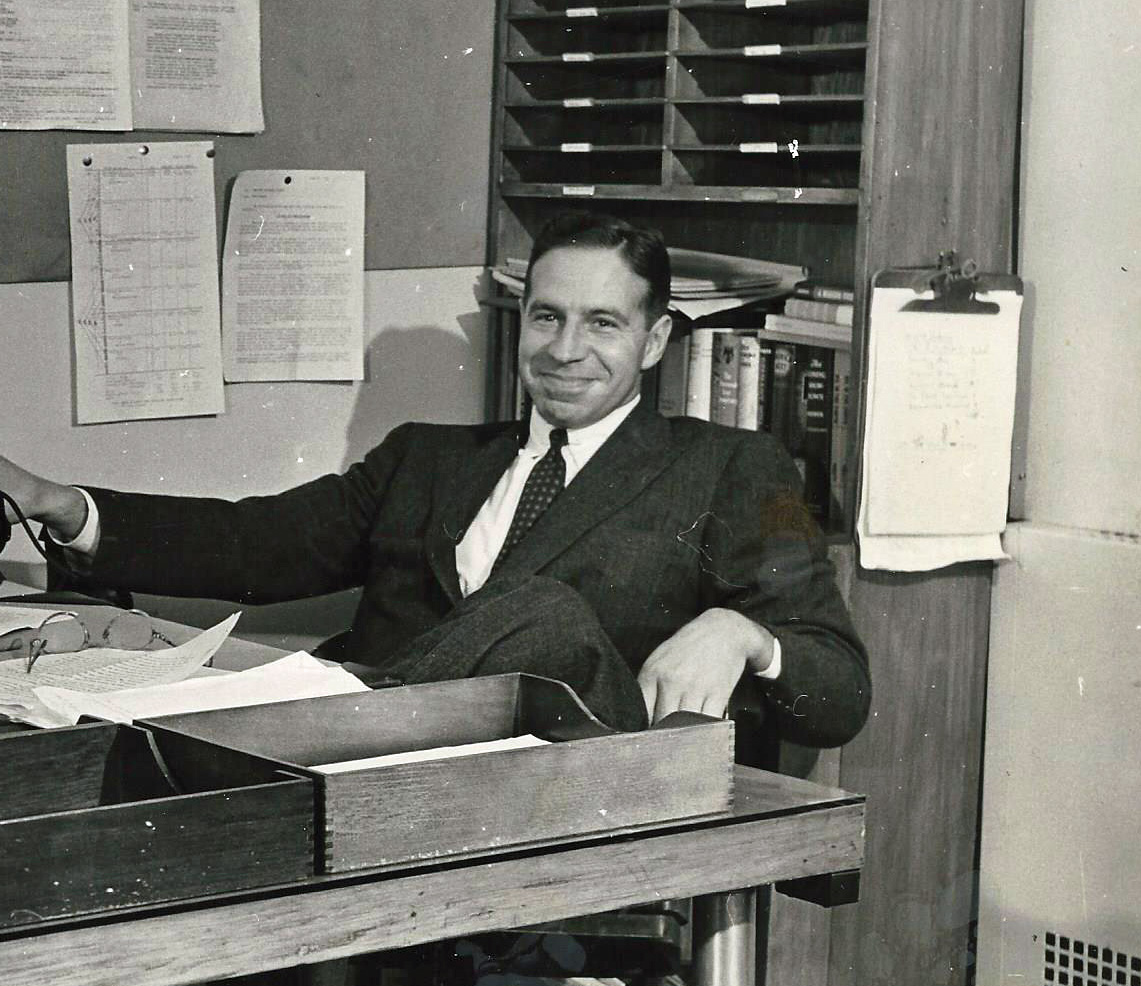
I just recently rewatched on Turner Classic Movies the film “Seven Days In May” about an attempted military takeover of the United States Government.  The film was made from a novel of the same name published in 1962 written by Fletcher Knebel and Charles W. Bailey II, political journalists familiar with Washington D.C. who researched their subject.  The film was made with help, assistance and encouragement from the Kennedy administration, Kennedy reputedly believing it depicted threats that were real at the time.  It was due for release in December 1963, which would have been just days after Kennedy’s November 22, 1963 assassination.  Because of the assassination, release of the film was delayed until mid-February of 1964.

There are rumors that, after the Kennedy assassination, Frank Sinatra pulled from circulation director John Frankenheimer’s already released (October 1962) previous film, “The Manchurian Candidate,” explicitly about a conspiracy orchestrating a political assassination in order to takeover the U.S. presidency.  Even if the film wasn’t widely shown for a time after the assassination, according to Wikiepdia, those rumors have been disproved, and, additionally, the film was apparently revived at a cinema in Brooklyn, New York two months after the assassination.

Nevertheless, it is said that the Kennedy assassination also affected what was ultimately the content of Dr. Stangelove, another film released soon after the assassination, at the end of January 1964.  The film was a satire about strategies of “Mutual Assured Destruction” (MAD) devolving into nuclear Armageddon. Stanley Kubrick, the director, had filmed a War Room pie fight to end the film, “the best pie fight ever filmed.”  However, the pie fight seemed tone deaf after Kennedy’s killing, including a portion where George C. Scott’s character General Buck Turgidson holding in his arms a pie-stricken U.S. president played by Peter Sellers as president says:
Gentlemen, our beloved president has been infamously struck down by a pie in the prime of his life! Are we going to let that happen? Massive retaliation! 
The scene reportedly got as far as a test screening that occurred right around the time of the actual assassination.  More likely Kubrick would have sacrificed the scene anyway realizing that no matter how technically executed it may have been it did not sync properly with the film’s satire.  In addition, according to its screenwriter, Terry Southern, studio executives were apparently skeptical of the scene from the beginning plus they were beginning to turn on the film and disavow it as ‘un-American” or “anti-military.”

Monday, September 10, 1962, evaluating the book “Seven Days in Maybefore Kennedy’s assassination and before the movie was made, New York Times reviewer Orville Prescott started out by putting it in the genre of  Sinclair Lewis’ “ironically” titled "It Can't Happen Here."   He noted that the authors “are both experienced newspaper men. .  Both employed in the Washington bureau of the Cowels publication and judged by this book, they view the course of future events with considerable alarm and [t]hat they know much about the Washington scene, the routine life inside the White House and inside the Pentagon.”   Prescott, however, offers no rousing endorsement of the book concluding that with “stock characters” the prose does not “make the most of” its plot coming across like a “parlor game” that “as a whole never seems real.”  Acknowledging that it is scheduled to become a movie Prescott offers that “it ought to make a better movie than it is a novel.” Notwithstanding, the novel was a bestseller with an appreciable run.

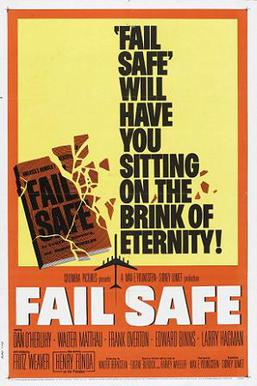
Returning to mention the novel in his writing again a few weeks later about “Fail-Safe,” like “Strangelove” dealing with the specter of nuclear Armageddon (October 24, 1962), Prescott commented that “according to several of this autumn's new novels, the near future is going to be even more unpleasant than most of us sensible pessimists expect.”  While Prescott opines that “Fail-Safe” “cannot fail to chill the spinal columns of its readers,” and his verdict is that it was a “slam-bang thriller” despite its “deficiencies as fiction,” he concludes, much like he did with the novel “Seven Days in May,” that the authors “have no gift whatever for characterization” the “prose is commonplace” and the “dramatization . . crude and mechanical.”   Again, the novel was, nevertheless, a bestseller.  He does credit the authors for having done “considerable research assembling declassified material” and with basing the novel on a real incident. 

“Fail-Safe” too became a film, coming out after, but on the heels of  “Dr. Strangelove” (October 7, 1964).  The film, although a drama rather than comedic, was so similar to “Strangelove” that “Strangelove” director Kubrick filed a copyright infringement lawsuit against it (both were Columbia Studio pictures), settling that suit based on an agreement that “Fail-Safe” would come out after his film.  The devastating nature of the Kubrick comedy probably severely undermined and helped account for the poor performance of “Fail-Safe” at the box-office.
             
The New York Times Bosley Crowther review of the film “Seven Days in May” necessarily came out after the Kennedy assassination.  Under those circumstances, the “suffering cats and little kittens!” exclamation accompanied lead-in of the review dealing with a film about “not too farfetched speculations” seems oddly lighthearted.  (Does that translate to “farfetched”, but not toofarfetched”?)  To wit:
It's beginning to look us though the movies are out to scare us all to death with dire and daring speculations on what might happen, any day in Washington.

First we had "Dr. Strangelove or: How I Learned to Stop Worrying and Love the Bomb," . .  .  Now, . . . we are offered a similarly fearsome prospect of the crisis that might occur if another Air Force general planned to seize control of the Government.

. . .  One might ask what we're coming to if such shocking thoughts are penetrating the deep domes of Hollywood!
Rod Serling
Crowther credits that the film “gathers a sense of actuality and plausibility.”  Actually, the script was obviously written with great seriousness by Rod Serling, of his very best.  It has none the `this-is-fantasy' or `this-is-speculation' veneer with which Serling avoided censorship with his Twilight Zone scripts.   Many of the Twilight Zone scripts Serling wrote were trenchantly antiwar.  By creating that science fiction fantasy anthology series Serling, sorely vexed by censorship, mainly from television sponsors, but not always just sponsors, side-stepped such censorship (a clever ruse?).

Crowther praises Serling for one sentiment expressed by the film’s fictional president, played by Frederick March, who says that the enemy is not the general, but the nuclear age: “It happens to have killed man's faith in his ability to influence what happens to him.”  To me (at least in 2017) incorporation of the sentiment that Serling apparently recycled from the original novel rang hollow.  The film as praised by Crowther and others is safe for its audiences, and perhaps for the larger world of the-powers-that-be, in that it hopefully holds out democracy, its institutions, the constitution, and basic human decency as strong enough to triumph.  And it also sticks with the idea that the mutinous generals, still principled, just have a different calculation of what to do in face of their fear of nuclear weapons. . .

. . . What the film never offers is any idea of how the money side of armaments can perpetuate their continuation and even use.

“Seven Days in May,” like “Strangelove” and “Fail-Safe,” is also about the balance of terror with Russian as a threat and the potential for worldwide nuclear holocaust.  A plot point of analysis is whether the U.S. military coup, if successful, would have provoked the Russian attack the generals wanted to forfend against.  Similar to how Crowther couches his praise for “Seven Days in May,” “Fail-Safe” is sometimes praised as a superior to “Strangelove’s” treatment of the same subject matter for being more soberly adult or mature, because it launches its speculative disaster scenario from the presumption of good intentions on the part of those in the military industrial complex.

Crowther’s review of “Seven Days in May,” says that the `plausibility’ of the plot (which takes place in what was then the future- May 1974) does not extend to “one twist,” which is the supposition of a large secret military base- some 3000+ men- in El Paso, Texas.  Next to the Mexican border El Paso is the actual location of Fort Bliss, one of the largest military complexes of the United States Army and very active in recent years as the largest training area in the United States, plus the home of other security facilities.  It is the home of one of the privately-owned ICE immigrant detention centers about which the public knows little these days even as these private ICE centers operate outside most conventional laws and the United States and ICE funding and private ownership of ICE centers is increasing dramatically.  If “Seven Days in May” was remade in another update, the takeover of the government would not be by the military, but by an even less accountable joint operation between the military and the mercenary corporations the military industrial surveillance complex now contracts out to.

When it comes to the military industrial surveillance complex interesting questions can be raised about what one can write about.  That is certainly the topic of director Steven Spielberg’s new “The Post” film concerning publication of the Pentagon Papers that documented decades of lies by the U.S. government about the Vietnam War (to get back to one of original subjects), which the government enjoined the New York Times from publishing as a violation of the espionage act.  The papers were copied and furnished by  Daniel Ellsberg a United States military analyst employed by the RAND Corporation at the time.

That was Daniel Ellberg’s role then.  Ellsberg is only now, with his new book “The Doomsday Machine: Confessions of a Nuclear War Planner” detailing information from his “top-secret nuclear studies, his front row seat to the Cuban missile crisis” (the crisis that helped set the national consciousness for the nuclear war subject films discussed here) when Ellsberg was a consultant with the Pentagon and the White House.  According to his account, Ellberg himself drafted plans for nuclear war and was privy to plans for nuclear war that were “insane” and “evil” in the hundreds of millions of people that would have been killed world-wide.


The question of what one theoretically can and cannot publish about the military can be interesting. 
"Red Alert"- Original title
The book “Red Alert” from which “Dr. Strangelove” was made was published in 1958 in the United Kingdom.   It was written by Peter George, an ex-RAF intelligence officer under the pseudonym Peter Bryant.  The later more popular “Fail-Safe” was published in the United States.  Terry Southern, screenwriter for “Strangelove,” asserts that because “national security regulations in England, concerning what could and could not be published, were extremely lax by American standards” George was able to “reveal details concerning the `fail-safe’ aspect of nuclear deterrence . . . that, in the spy-crazy U.S.A. of the Cold War era, would have been downright treasonous” and thus give all the “complicated technology of nuclear deterrence in Dr Strangelove” a base “on a bedrock of authenticity” that gave the satirical film the strength of credibility.

Keeping the military’s secrets about the potentially absurd destruction of the entire world at its hands is one thing.  Avoiding the more omnipresent censoring influences of commercial interests is another.  Rod Serling bridled at the censorship that emanated from the TV sponsors who readily rankled at the slightest hint of anything in a script that could `threaten’ corporate profits: For instance, Serling told of how the line, “Got a match?” had to be eliminated from the script of “Requiem for a Heavyweight” because the sponsor of the show as Ronson Lighters, and how the Chrysler Building had to be painted out of the New York skyline of a show that was sponsored by Ford Motor Company.

In this day and age of merging conglomerates the heavy hand of commercialism is more consequential with one the most overriding humankind-destroying concerns being that climate change misses getting reported on, almost as if it were a classified secret itself.   Because that reporting would affects profits; Not because we are afraid of the Russians.

It is one thing that the Kochs and fossil fuel companies spend phenomenal amounts of money to spread misinformation about climate change.  We moreover have to deal with how in 2016, the year of the national presidential elections, already scant reporting of climate change was reduced drastically and questions about climate change were left out of the presidential debates.  In 2017 the national networks and corporate media managed to report on extraordinary hurricanes and massive wildfires continually breaking records without mentioning climate change.

And now, as the Kochs acquire their ownership interest in Time Inc. we, like former Time editor Charles Alexander, must worry that what is motivating the Kochs is their desire to have the public see even fewer references to climate change and its world-destroying implications.  As media ownership concentrates overall throughout the country we may similarly worry that we will achieve less insight and learn less about what we need to know concerning the current day equivalents of the Vietnam War as well as all the things that the military industrial surveillance complex is up to that we would want to know more about.  .  .

.  .  As much of the discussion here makes evident, media in our culture is an all enveloping cocoon.  What does or does not get through in the way of ideas and possibilities because of who owns or sponsors that media affects our thinking mightily.

Although not perfect, Time magazine may have produced good climate change reporting and Fortune may have been, for its era, to the left in reporting economic matters, but with more and more of the kind of events we see represented by the Koch's Time Inc. ownership acquisition, we are moving ever further away from the the balance we had in the media then, whatever it was and such as it might have been.