Sunday, January 7, 2018

A Timeline of Reporting Dramas: Movies About Journalistic Coverage of Real Public Issues and Events

"The Post" vies for Academy awards in one delivered issue of the New York Times running a front page advertisement, plus a double page interior advertisement that appeared with a promotional interview of its stars, Streep and Hanks.
- *NOTE: Since the publication of this original post National Notice has published an updated list of films that includes, as one of its updates, “Shock and Awe.”  See: Time To Update Our Timeline Presenting Movies About Real Journalists Covering Real Public Issues and Events (To Include “Shock and Awe” and “Risk”), Sunday, July 15, 2018.-  
With Steven Spielberg’s “The Post” currently up and vying for Academy Awards, including Best Picture, and given the way that “The Post” ends with a scene denoting it as a prequel to the renowned “All The President’s Men” (1976), I thought it was time to gather a list of films that have been made  in either documentary fashion, or in dramatic form based on real reporting events that are about the subject of journalism. My interest was in films that are about the duties involved and the issues and decisions that the practice of journalism raises.  . . . I decided that it would be instructive to present them in timeline fashion, basing the timeline, not on the year that films were made, but upon the time period of the actual reporting of those events that took place.

Although I am not endorsing the accuracy with which any of these films convey history, I am including in my list only films that are about the ostensible reporting of ostensibly real events with particular interest in what made the decisions about such reporting dramatic at the time.

There are films that are inspired by real events and are great films about reporting, journalism and the newspaper business, but if those films are too highly fictionalized I am leaving them out.  “Citizen Kane,” (1941), inspired by the life of newspaper publisher `Citizen' William Randolph Hearst, is a great film and raises issues about what gets reported and with what sort of motives and sensationalism, but it is obviously highly fictionalized even if Hearst himself sought to smear/destroy its director Orson Wells and wanted the film destroyed (there is a dramatic HBO film precisely about that: “RKO 281" (1999).  Although my grandfather, Thomas Justin White, was General Manager and one-time president of the Hearst organization I don’t include “Citizen Kane” in the list.  (The film doesn’t happen include any character representing my grandfather).

Other great films on the subject of newspapers and journalism that don’t involve real journalists or real events include the versions of “Front Page” (1931 and 1974) and “His Girl Friday” (1940), “Broadcast News”  (1987), and the savage Paddy Chayefsky satire “Network” (1976).  “Mr. Smith Goes to Washington” (1939) has scenes key to the plot that depict how critical it is to a villainously corrupt political machine’s control of an unnamed western state for the machine to exercise a monopoly on the information with which newspapers and radio stations in the state supply its population.

I could perhaps arguably include three films that can be watched as a triptych: “Capote” (2005), “Infamous” (2006) and “In Cold Blood” (1967) as being about the death penalty and Truman Capote’s book.  I didn’t, and the last of those films, simply the film made from the book, doesn’t have Capote or a journalist as a character.

If journalism and its ethics is too remote from the central focus of the story (“The Killing Fields” 1984, “Salvador” 1986, and “Fear and Loathing in Las Vegas” 1998) I am not including films in my list, notwithstanding that real journalists are characters in the films.  Maybe I ought to be including “Live From Bagdad” an HBO film about CNN reporting (and yet one more film starring Michael Keaton as a journalist) or “Control Room” (2004, about Al Jazeera reporting, but I don’t know enough about them at the moment.

“Quiz Show” (1994) stands out as a delightfully fun film about a television network's deceit of the American public.  I am not including it since the famous deceit tsk-tsked by the film is with respect to the facts of the NBC television network’s own rigged game shows, rather than the reporting of the facts of important national events.  (It was based on events covered in a book “Prime Time and Misdemeanors: Investigating the 1950s TV Quiz Scandal A D.A.'s Account,” co-authored by Joseph Stone, and my mother-in-law’s boyfriend, Tim Yohn.)  However, a film that could be be made that would arguably make this list would be about another rigged NBC game show that in more recent times did not get tsk-tsked, “The Apprentice,” which helped a misrepresented featured participant, Donald Trump, go on to the U.S. presidency.  . . Yes, although fictional, "Broadcast News" and "Network" were both cautionary about the failure to distinguish news from entertainment, a failure that helped pave the way to Trump's becoming our distractor-in-chief.

Many of the films in my timeline feature whistle-blowers.  In many of the films people pay prices or are very much in danger of paying high prices, including ruined careers, prison or even loss of life, for reporting news the government or the otherwise powerful want to suppress.

There are shorter form, certainly informative documentaries I am not including like Frontline’s, “WikiSecrets,” about the release of alarming information about US military conduct by Bradley/Chelsea Manning through Julian Assange’s Wikileaks.  And, not included, Frontline has covered subjects about manipulation of the media by big and dirty corporate money seeking political manipulation in segments like: “Climate of Doubt” and “Big Sky, Big Money.”  . .  Also not included is an HBO recent 'documentary' about Washington Post editor Ben Bradlee, basically the audio-book version of Bradlee’s self-flattering autobiography with pictures, “The Newspaperman: The Life and Times of Ben Bradlee.”

I am also not including documentary films that are overall critiques about the failure of mainstream American corporate media in general to report reliably, such as “Project Censored the Movie” (2013) or “Outfoxed: Rupert Murdoch's War on Journalism” (2004) that offers a political view about the particular unreliability of Fox News.  I am not including such films even though their skepticism might undermine the sometimes rosy hopes that films in my chronological list sometimes offer about how it is envisioned mainstream media may do its job.

Here then is my list that presents a chronology in which you can see an evolution of what we have believed has been the role of journalists in reporting on the actual conflicts of our changing times.

    •    Good Night, and Good Luck (2005).  Set in 1953, during the early days of television broadcast journalism. Edward R. Murrow along with his CBS news team take a stand and take on the anti-communist fear mongering of  Senator Joseph McCarthy.

    •    All Governments Lie: Truth, Deception, and the Spirit of I.F. Stone (2016).  This film covers the legacy of investigative journalist I.F. Stone who died at 81 in 1989, who writing in his I.F. Stone Weekly (1953–71), reported about and during the eras of Joe McCarthy, Lyndon Johnson all the way to Ronald Reagan.  I. F. Stone's life and work, just a portion of the film, is the launching point to review many more recent government lies and their uncovering by journalists since.

    •   The Post (2017) and The Pentagon Papers (2003).  Both are dramas about the publication of the Pentagon Paper released by Daniel Ellsberg, who had worked on the study.  The papers were first brought to the attention of the public on the front page of The New York Times starting Sunday, June 13th, 1971.  The Washington Post began publishing its own series of articles based upon the Pentagon Papers on June 18, 1971.
    •    All The President’s Men (1976).  About the Washington Post’s coverage of the Watergate scandal.  The Watergate scandal began with the incident with which “The Post” ends: On June 17, 1972, security guard Frank Wills at the Watergate complex finds a door's bolt taped over so that it will not lock.
    •    Frost/Nixon (2008). Based on the David Frost interviews of Richard Nixon recorded and broadcast on television in four programs in 1977 in which Nixon climatically admitted his wrongdoing.
    •    Kill The Messenger (2014).   Based on the true story of journalist Gary Webb, the film takes place in the mid-1990s. Webb uncovered the CIA's role in importing cocaine into the U.S. to secretly fund the Nicaraguan Contra rebels through the manufacture and sale of drugs in the U.S.  Pressure to drop pursuit of his story Webb published his evidence in the series "Dark Alliance."  He then experienced a vicious smear campaign fueled by the CIA, during which he found himself defending his integrity, his career, his family, ending in his unfortunate death.  (This film somewhat oddly does not show up as readily when googling these subjects as the others do.)

    •    The Insider (1999).  About whistle-blower Jeffrey S. Wigand who became famous for his appearance in 1996 on the CBS news program 60 Minutes to reveal that the Brown & Williamson tobacco industry company had intentionally manipulated its tobacco blend with chemicals to increase the addictive effect of nicotine in cigarettes.  The film is about how CBS, with business motivations driving it, was suppressing the story while a smear campaign was conducted against Wigand, and about the ultimate involvement of the Wall Street Journal and New York Times in getting the story out.  Afterwards, in real life, the producer of the Wigand segment, Lowell Bergman, portrayed in the film by Al Pacino, went on to work for the New York Times, including working on collaborations with “Frontline.”
    •    Shattered Glass (2003).  A film about the embarrassment of how for three years until 1998 many of the humorous and entertaining articles that Stephen Glass wrote for the liberal magazine “The New Republic” were cobbled together from his multiple inventive fictions.

    •    Spotlight,” (2015).   It is based on a series of stories by the "Spotlight" team about the Catholic Church's concealment of its priests' sexual abuse of children that earned The Boston Globe the 2003 Pulitzer Prize for Public Service. (With news stories appearing from January 6, 2002 to December 14, 2002).

    •    Truth (2015).  This film is another about the CBS news program 60 Minutes.  It takes place in the months leading into the US 2004 presidential election (Bush v. Kerry) and tells the story about how CBS News anchor Dan Rather and others working for the CBS program were subject to criticism and lost their jobs for alleged liberal bias in reporting a basically true story about preferential treatment of George W. Bush in the National Guard (1968 to 1973 during which time Bush did not show up for a medical exam and stopped fulfilling his flying commitments) when it turned out that documents with which the newspeople had been supplied to support their story were likely faked in whole or in part by somebody.

    •    The Fifth Estate (2013), Underground: The Julian Assange Story (2012) We Steal Secrets: The Story of WikiLeaks (2013) Mediastan (2013) All of these films deal with Julian Asssange, the founding of Wikileaks (in 2006) and related events through 2010.  “Underground” covers the earliest period of Assange's life (the 1980s and 1990's pre-1997).

    •    Page One: Inside the New York Times (2011)  It deals with Times coverage of many things mostly during the time it was made, such as the 2008 bankruptcy of Tribune Media and The Afghan War documents leak, also called the Afghan War Diary, published by WikiLeaks in July 2010.

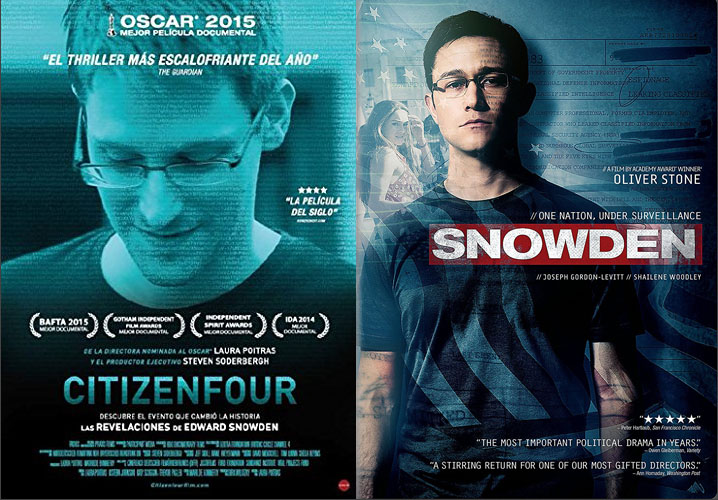
    •    Citizenfour (2014) and Snowden (2016). Respectively, first the film that won the Academy Award for best documentary and the subsequent Oliver Stone directed bio-pic that both cover Edward Snowden’s leaks to journalists of classified information from the National Security Agency (NSA) in 2013 concerning the extensive and illegal spying of the US government on U.S. citizens and on others around the world after the 9/11 attacks.

Sunday, December 31, 2017

As The Kochs Acquire Ownership of Time Inc.- More About Where On The Spectrum Of Left/Right Politics That Publishing Organization Was Once To Be Found Plus More About What Once Did and Didn’t Get Said/Published In The U.S. Media

As the Koch Brothers were stalking ownership of Time Inc., (the Time Life empire that includes the once mighty Time Magazine), I wrote here from a standpoint of somewhat unique personal experience about how, whatever we may worry that Time will become, subject to Koch influence, that Time Magazine was not exactly a very liberal magazine to begin with.  In the course of doing so, I wrote about my uncle, Ralph Delahaye Paine, a Time/Life man of significant stature in his time.  See: Kochs Move To Acquire Ownership In Time/Life, Which On The Political Spectrum Was Previously. . . (Let Me Tell You) - Our Media, Never In a Good Place, Shifts Toward. . ?? Friday, November 17, 2017.

Time Inc. currently publishes Time, Sports Illustrated, People, Fortune and Entertainment Weekly.

Since I last wrote, the Koch ownership acquisition has gone forward.  And since that time I have come across and had a chance to remember and think about a letter in praise of my uncle written after his death to Fortune magazine by revered economist and writer John Kenneth Galbraith.  It expressed Galbraith's opinion of where on the political spectrum Fortune magazine (not necessarily Time) was under the stewardship of my uncle: That Fortune was “with some exceptions . . . by the standards of the time dangerously to the left.”
   
The Koch acquisition of the interest in Time Inc. is reportedly causing consternation about Time’s editorial direction internally on the part of Time staff and one former Time editor, Charles Alexander has promulgated his worry that his 23-year of work at Time work will go "down the drain."  Although he admits that Time was a “conservative publication” under publisher Henry R. Luce with that “bias” persisting “for a long time after Luce’s death in 1967," Mr. Alexander points out Time Magazine’s important converge of climate change, a subject about which the Kochs, in the fossil fuel industry, have invested long and massively to spread disinformation about.

Jane Mayer, author of "Dark Money," about the Kochs and how they have built up their political machines and influence, obtained thoughts on the Koch Time Inc. investment from Emily Bell, a professor of professional practice at the Columbia University Graduate School of Journalism for an article in the New Yorker.  Bell said that she doubts that the Kochs have put six hundred and fifty million dollars into the purchase of a media company saddled with ailing print publications only for financial reasons: “It can’t just be the return on investment, because, if so, you’re in the wrong asset class,” she said.

When ownership of publications changes hands, It is not just the future slant of the publication that should be worried about.  Sometimes what had been published in the past vanishes or becomes less accessible.  That is what recently happened when the Gothamist, providing coverage of local New York City news, was acquired by an opinionated conservative Republican buyer.

That’s one reason why we need libraries.  Not everything is available on the internet; not everything remains on the internet.

One thing you can’t currently find on the internet is the letter, published in Fortune, that John Kenneth Galbraith wrote in tribute to my uncle Ralph Delahaye Paine after his death in January 1991.  In it, Galbraith expresses his view that the writing in Fortune magazine, under my uncle could be considered on the left for that day and age.  I can offer that Galbraith's assertion to balance out the observation I made when previously writing about the pending Koch investment in Time Inc. that Time magazine was not very liberal when reporting about the Vietnam War.
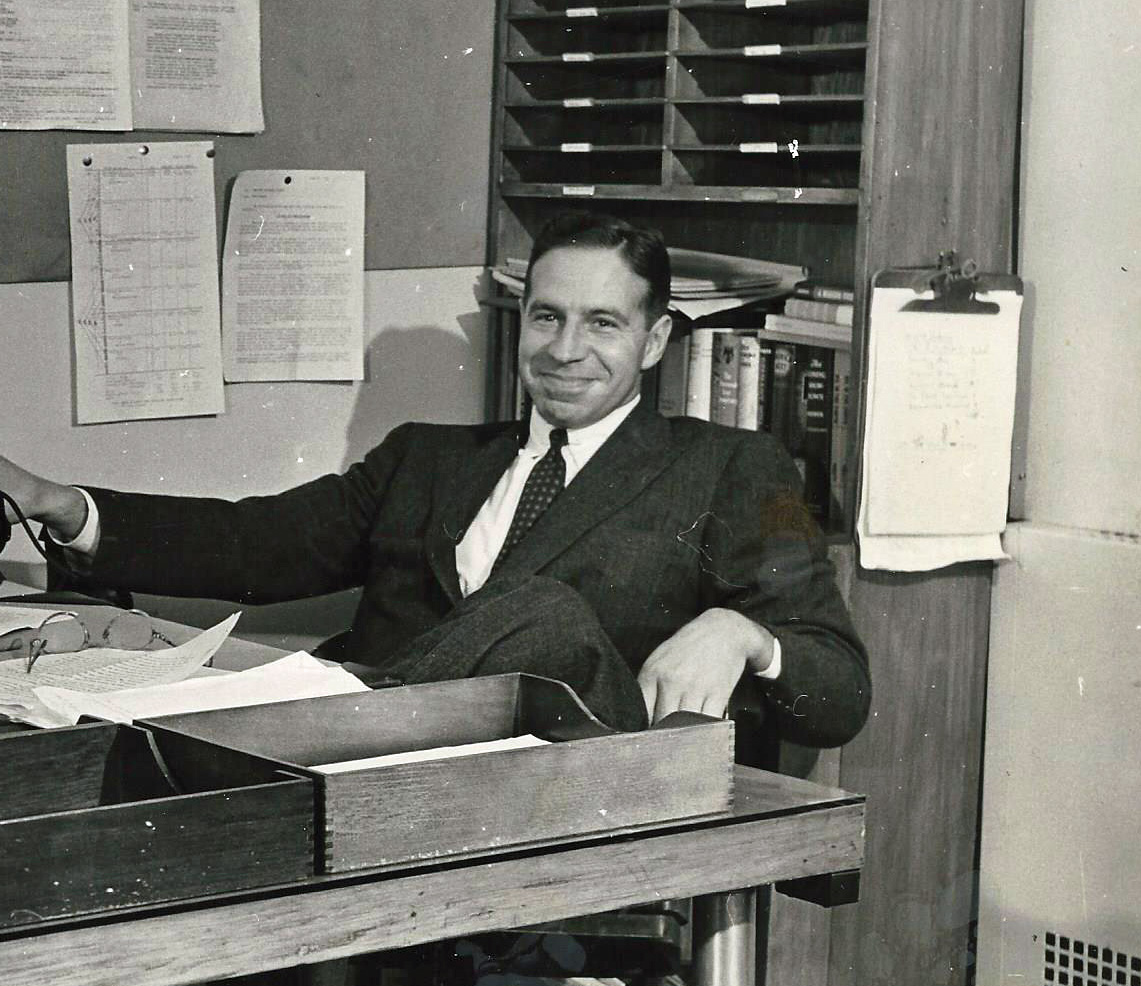
Ralph Delahaye “Del” Paine Jr. in the FORTUNE years
To reiterate, Fortune is one of the publications in which the Koch’s have acquired an ownership interest.  Here is what Galbraith wrote about my uncle and the time he spent working under him at Fortune:
IN TRIBUTE TO DEL PAINE

I read in January of the death of Ralph Delahaye “Del” Paine Jr., who was editor and managing editor of FORTUNE from 1941 to 1953 and publisher from 1953 to 1967. I share with the present editors and the readers of FORTUNE my admiration and affection for a truly notable and much-loved figure in the history of journalism.

In the autumn of 1943 I joined the editorial staff of FORTUNE. I was never more content. Gathered under Paine was perhaps the most remarkable community of writers ever brought together on one magazine. Archibald McLeish, Dwight McDonald, and James Agee had but recently departed. The inimitable Eric Hodges of Blandings fame, Wilder Hobson, and the Davenport brothers, Gilbert Burke, and others were very much present. All were young; all shared an unqualified respect and affection for our young editor, then in his mid-30s.

With some exceptions we were by the standards of the time dangerously to the left. For some, like Dwight McDonald, Marx was a far from irrelevant figure. More generally, the New Deal was seen as an essential design for escaping the widespread economic devastation of the Great Depression. It was Del’s task to make us reasonably acceptable to our business readers.

This heated with intelligence, tact, and charm.  He was assisted by the thoughtful view, strongly supported by Henry R. Luce, that businessmen would rather read well-written, interesting, politically debatable articles with pleasure and comprehension then basically unintelligible prose with which they might agree. The acceptability, even prestige, of the magazine affirmed the rightness of this view.       

JOHN KENNETH GALBRAITH
Cambridge Massachusetts
The letter, clipped from Fortune, hangs in my mother’s hall.  I’d like to think that when John Kenneth Galbraith himself died in 2006 my mother returned the favor by writing to Galbraith’s family, his four sons included, to recollect some of the flattering things my uncle had to say about Galbraith, but I am not sure that happened.
John Kenneth Galbraith was not just a famed economist and writer; he was also a member of John F. Kennedy’s administration serving formally under Kennedy as ambassador to India.  The other day I was listening to John Kenneth Galbraith’s son, James K. Galbraith, explaining how Kennedy involved his father to support him in his efforts to pull out of the Vietnam War.  James K. Galbraith is an economist and writer like his father who teaches as a professor at the University of Texas.  The discussion was on Austin’s KUT public radio station program Views and Brews hosted by Rebecca McInroy and he was speaking with Dr. John Newman, a retired U.S. Army Intelligence Officer and historian, about his book “JFK and Vietnam.”  (V&B: JFK and Vietnam – What We Know & Why It Matters, May 18, 2017.  You may want to save this link if you want to find this talk again: Google’s algorithm doesn’t have this showing up quickly making it hard to find.)
   
Ultimately influential, Dr. Newman’s book documents with first-hand research evidence of JFK’s decision to withdraw from Vietnam just before he was assassinated, confirming and fleshing out accounts that the senior Galbraith shared with his son James.  That book championed by James Galbraith is as of now recently available, but it was published 26 years prior only to be suppressed and pulled from bookstore shelves by its publisher.  That was despite the book's being reviewed on the front page of the New York Times Book Review Section by Kennedy special assistant and historian Arthur Schlesinger, Jr. who also said "This commanding essay in critical history is the most authoritative account anywhere of President Kennedy's Vietnam policy and it is fascinating reading as well." Plus it was endorsed by former CIA head William Colby.

When the NSA failed to stop the book with unsuccessful claims its information was classified the publisher cooperatively made the book unavailable anyway.  That is another example of why who owns the media is so critically influential what the public hears or reads about.  Similarly, after 9/11 Michael Moore’s publisher was going to pulp, unpublished, a book it had printed that it felt was too critical of George W. Bush.  When that book was rescued by a librarian leading comrades it became a bestseller.

The KUT discussion was months prior to the release this year of Ken Burns’ “The Vietnam War” on PBS, but Galbraith and Newman already knew and were dismayed that the Burns 18 hour documentary left out of its narrative any reference to Kennedy’s likely withdrawal plans.  Another similar failure of the Burns documentary, at least in tone, that I found jarring is that while it covered the assassination of Martin Luther King, Jr. as a relevant major national event, the documentary, epically focused on Vietnam as its subject, didn’t note the incredibly strange resonance that King’s April 4, 1968 assassination was on the one-year anniversary of King’s historically pivotal April 4, 1967 Riverside Church denunciation of the War.

It is interesting to review what is and is not deemed acceptable to express as the events of history re-contour the landscape around us.  A lot of what gets said has to do with who are the gatekeeping owners and sponsors of our media.

I just recently rewatched on Turner Classic Movies the film “Seven Days In May” about an attempted military takeover of the United States Government.  The film was made from a novel of the same name published in 1962 written by Fletcher Knebel and Charles W. Bailey II, political journalists familiar with Washington D.C. who researched their subject.  The film was made with help, assistance and encouragement from the Kennedy administration, Kennedy reputedly believing it depicted threats that were real at the time.  It was due for release in December 1963, which would have been just days after Kennedy’s November 22, 1963 assassination.  Because of the assassination, release of the film was delayed until mid-February of 1964.

There are rumors that, after the Kennedy assassination, Frank Sinatra pulled from circulation director John Frankenheimer’s already released (October 1962) previous film, “The Manchurian Candidate,” explicitly about a conspiracy orchestrating a political assassination in order to takeover the U.S. presidency.  Even if the film wasn’t widely shown for a time after the assassination, according to Wikiepdia, those rumors have been disproved, and, additionally, the film was apparently revived at a cinema in Brooklyn, New York two months after the assassination.

Nevertheless, it is said that the Kennedy assassination also affected what was ultimately the content of Dr. Stangelove, another film released soon after the assassination, at the end of January 1964.  The film was a satire about strategies of “Mutual Assured Destruction” (MAD) devolving into nuclear Armageddon. Stanley Kubrick, the director, had filmed a War Room pie fight to end the film, “the best pie fight ever filmed.”  However, the pie fight seemed tone deaf after Kennedy’s killing, including a portion where George C. Scott’s character General Buck Turgidson holding in his arms a pie-stricken U.S. president played by Peter Sellers as president says:
Gentlemen, our beloved president has been infamously struck down by a pie in the prime of his life! Are we going to let that happen? Massive retaliation! 
The scene reportedly got as far as a test screening that occurred right around the time of the actual assassination.  More likely Kubrick would have sacrificed the scene anyway realizing that no matter how technically executed it may have been it did not sync properly with the film’s satire.  In addition, according to its screenwriter, Terry Southern, studio executives were apparently skeptical of the scene from the beginning plus they were beginning to turn on the film and disavow it as ‘un-American” or “anti-military.”

Monday, September 10, 1962, evaluating the book “Seven Days in Maybefore Kennedy’s assassination and before the movie was made, New York Times reviewer Orville Prescott started out by putting it in the genre of  Sinclair Lewis’ “ironically” titled "It Can't Happen Here."   He noted that the authors “are both experienced newspaper men. .  Both employed in the Washington bureau of the Cowels publication and judged by this book, they view the course of future events with considerable alarm and [t]hat they know much about the Washington scene, the routine life inside the White House and inside the Pentagon.”   Prescott, however, offers no rousing endorsement of the book concluding that with “stock characters” the prose does not “make the most of” its plot coming across like a “parlor game” that “as a whole never seems real.”  Acknowledging that it is scheduled to become a movie Prescott offers that “it ought to make a better movie than it is a novel.” Notwithstanding, the novel was a bestseller with an appreciable run.

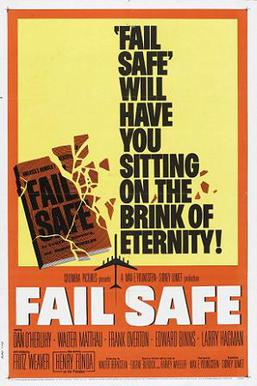
Returning to mention the novel in his writing again a few weeks later about “Fail-Safe,” like “Strangelove” dealing with the specter of nuclear Armageddon (October 24, 1962), Prescott commented that “according to several of this autumn's new novels, the near future is going to be even more unpleasant than most of us sensible pessimists expect.”  While Prescott opines that “Fail-Safe” “cannot fail to chill the spinal columns of its readers,” and his verdict is that it was a “slam-bang thriller” despite its “deficiencies as fiction,” he concludes, much like he did with the novel “Seven Days in May,” that the authors “have no gift whatever for characterization” the “prose is commonplace” and the “dramatization . . crude and mechanical.”   Again, the novel was, nevertheless, a bestseller.  He does credit the authors for having done “considerable research assembling declassified material” and with basing the novel on a real incident. 

“Fail-Safe” too became a film, coming out after, but on the heels of  “Dr. Strangelove” (October 7, 1964).  The film, although a drama rather than comedic, was so similar to “Strangelove” that “Strangelove” director Kubrick filed a copyright infringement lawsuit against it (both were Columbia Studio pictures), settling that suit based on an agreement that “Fail-Safe” would come out after his film.  The devastating nature of the Kubrick comedy probably severely undermined and helped account for the poor performance of “Fail-Safe” at the box-office.
             
The New York Times Bosley Crowther review of the film “Seven Days in May” necessarily came out after the Kennedy assassination.  Under those circumstances, the “suffering cats and little kittens!” exclamation accompanied lead-in of the review dealing with a film about “not too farfetched speculations” seems oddly lighthearted.  (Does that translate to “farfetched”, but not toofarfetched”?)  To wit:
It's beginning to look us though the movies are out to scare us all to death with dire and daring speculations on what might happen, any day in Washington.

First we had "Dr. Strangelove or: How I Learned to Stop Worrying and Love the Bomb," . .  .  Now, . . . we are offered a similarly fearsome prospect of the crisis that might occur if another Air Force general planned to seize control of the Government.

. . .  One might ask what we're coming to if such shocking thoughts are penetrating the deep domes of Hollywood!
Rod Serling
Crowther credits that the film “gathers a sense of actuality and plausibility.”  Actually, the script was obviously written with great seriousness by Rod Serling, of his very best.  It has none the `this-is-fantasy' or `this-is-speculation' veneer with which Serling avoided censorship with his Twilight Zone scripts.   Many of the Twilight Zone scripts Serling wrote were trenchantly antiwar.  By creating that science fiction fantasy anthology series Serling, sorely vexed by censorship, mainly from television sponsors, but not always just sponsors, side-stepped such censorship (a clever ruse?).

Crowther praises Serling for one sentiment expressed by the film’s fictional president, played by Frederick March, who says that the enemy is not the general, but the nuclear age: “It happens to have killed man's faith in his ability to influence what happens to him.”  To me (at least in 2017) incorporation of the sentiment that Serling apparently recycled from the original novel rang hollow.  The film as praised by Crowther and others is safe for its audiences, and perhaps for the larger world of the-powers-that-be, in that it hopefully holds out democracy, its institutions, the constitution, and basic human decency as strong enough to triumph.  And it also sticks with the idea that the mutinous generals, still principled, just have a different calculation of what to do in face of their fear of nuclear weapons. . .

. . . What the film never offers is any idea of how the money side of armaments can perpetuate their continuation and even use.

“Seven Days in May,” like “Strangelove” and “Fail-Safe,” is also about the balance of terror with Russian as a threat and the potential for worldwide nuclear holocaust.  A plot point of analysis is whether the U.S. military coup, if successful, would have provoked the Russian attack the generals wanted to forfend against.  Similar to how Crowther couches his praise for “Seven Days in May,” “Fail-Safe” is sometimes praised as a superior to “Strangelove’s” treatment of the same subject matter for being more soberly adult or mature, because it launches its speculative disaster scenario from the presumption of good intentions on the part of those in the military industrial complex.

Crowther’s review of “Seven Days in May,” says that the `plausibility’ of the plot (which takes place in what was then the future- May 1974) does not extend to “one twist,” which is the supposition of a large secret military base- some 3000+ men- in El Paso, Texas.  Next to the Mexican border El Paso is the actual location of Fort Bliss, one of the largest military complexes of the United States Army and very active in recent years as the largest training area in the United States, plus the home of other security facilities.  It is the home of one of the privately-owned ICE immigrant detention centers about which the public knows little these days even as these private ICE centers operate outside most conventional laws and the United States and ICE funding and private ownership of ICE centers is increasing dramatically.  If “Seven Days in May” was remade in another update, the takeover of the government would not be by the military, but by an even less accountable joint operation between the military and the mercenary corporations the military industrial surveillance complex now contracts out to.

When it comes to the military industrial surveillance complex interesting questions can be raised about what one can write about.  That is certainly the topic of director Steven Spielberg’s new “The Post” film concerning publication of the Pentagon Papers that documented decades of lies by the U.S. government about the Vietnam War (to get back to one of original subjects), which the government enjoined the New York Times from publishing as a violation of the espionage act.  The papers were copied and furnished by  Daniel Ellsberg a United States military analyst employed by the RAND Corporation at the time.

That was Daniel Ellberg’s role then.  Ellsberg is only now, with his new book “The Doomsday Machine: Confessions of a Nuclear War Planner” detailing information from his “top-secret nuclear studies, his front row seat to the Cuban missile crisis” (the crisis that helped set the national consciousness for the nuclear war subject films discussed here) when Ellsberg was a consultant with the Pentagon and the White House.  According to his account, Ellberg himself drafted plans for nuclear war and was privy to plans for nuclear war that were “insane” and “evil” in the hundreds of millions of people that would have been killed world-wide.


The question of what one theoretically can and cannot publish about the military can be interesting. 
"Red Alert"- Original title
The book “Red Alert” from which “Dr. Strangelove” was made was published in 1958 in the United Kingdom.   It was written by Peter George, an ex-RAF intelligence officer under the pseudonym Peter Bryant.  The later more popular “Fail-Safe” was published in the United States.  Terry Southern, screenwriter for “Strangelove,” asserts that because “national security regulations in England, concerning what could and could not be published, were extremely lax by American standards” George was able to “reveal details concerning the `fail-safe’ aspect of nuclear deterrence . . . that, in the spy-crazy U.S.A. of the Cold War era, would have been downright treasonous” and thus give all the “complicated technology of nuclear deterrence in Dr Strangelove” a base “on a bedrock of authenticity” that gave the satirical film the strength of credibility.

Keeping the military’s secrets about the potentially absurd destruction of the entire world at its hands is one thing.  Avoiding the more omnipresent censoring influences of commercial interests is another.  Rod Serling bridled at the censorship that emanated from the TV sponsors who readily rankled at the slightest hint of anything in a script that could `threaten’ corporate profits: For instance, Serling told of how the line, “Got a match?” had to be eliminated from the script of “Requiem for a Heavyweight” because the sponsor of the show as Ronson Lighters, and how the Chrysler Building had to be painted out of the New York skyline of a show that was sponsored by Ford Motor Company.

In this day and age of merging conglomerates the heavy hand of commercialism is more consequential with one the most overriding humankind-destroying concerns being that climate change misses getting reported on, almost as if it were a classified secret itself.   Because that reporting would affects profits; Not because we are afraid of the Russians.

It is one thing that the Kochs and fossil fuel companies spend phenomenal amounts of money to spread misinformation about climate change.  We moreover have to deal with how in 2016, the year of the national presidential elections, already scant reporting of climate change was reduced drastically and questions about climate change were left out of the presidential debates.  In 2017 the national networks and corporate media managed to report on extraordinary hurricanes and massive wildfires continually breaking records without mentioning climate change.

And now, as the Kochs acquire their ownership interest in Time Inc. we, like former Time editor Charles Alexander, must worry that what is motivating the Kochs is their desire to have the public see even fewer references to climate change and its world-destroying implications.  As media ownership concentrates overall throughout the country we may similarly worry that we will achieve less insight and learn less about what we need to know concerning the current day equivalents of the Vietnam War as well as all the things that the military industrial surveillance complex is up to that we would want to know more about.  .  .

.  .  As much of the discussion here makes evident, media in our culture is an all enveloping cocoon.  What does or does not get through in the way of ideas and possibilities because of who owns or sponsors that media affects our thinking mightily.

Although not perfect, Time magazine may have produced good climate change reporting and Fortune may have been, for its era, to the left in reporting economic matters, but with more and more of the kind of events we see represented by the Koch's Time Inc. ownership acquisition, we are moving ever further away from the the balance we had in the media then, whatever it was and such as it might have been.

Friday, November 17, 2017

Kochs Move To Acquire Ownership In Time/Life, Which On The Political Spectrum Was Previously. . . (Let Me Tell You) - Our Media, Never In a Good Place, Shifts Toward. . ??

Before we get to the "Time Goes Bye" part of this article (Koch Brothers stalking ownership of the once mighty Time Magazine), let's speak of "times gone by." 

I want to tell you a story that involves looking way back.

At the time of which I am speaking I was quite certainly in college, although when I think back remembering it feels almost as if I was still in high school, that I was so recently out of.  Since I was listening to WBAI on the radio, I had to have been in college and that means the year was probably 1970 or 1971.

On WBAI I heard a truly startling and appalling story about recent events in the Vietnam War.  I was sure it was going to be big news and probably would have a big influence on a lot of people when they too learned about it.  I wanted to see how else it would be reported, and I waited with eagerness for my weekly Time Magazine to come out and see how the story was featured.  When Time came out I scoured the week’s Vietnam War coverage and the event wasn’t there at all, not even a hint.  I was fit to be tied.

Once upon a time I had supported the Vietnam War, in high school seeing it in the basic good guy/bad guy terms in which my father had explained it to me: We were helping good guys against bad guys.  By the time of the story I am telling, I had shifted over in my thinking to oppose the war, having been chagrined to learn that by that time I did shift I was only just catching up with father’s own changed thinking to oppose the war.  Somehow, father and son, we had neglected to have that updating conversation before I told my father how increasingly troubled I was by the way I could not reconcile and sort through to believe that there were any truly good reasons for fighting a bad war.

My father, who voted for Lyndon Johnson instead of Barry Goldwater, was a Republican.  He was firmly against the war before he died at the end of 1968.  In addition, although I knew there were reasons my father had disliked Robert Kennedy based on my father's own early personal, youthful encounters with Kennedy (my father was from a similar Irish Catholic family that had contacts with the Kennedys), my father supported Robert Kennedy and his campaign for the White House that terminated with his assassination.  My father liked Kennedy’s stance on race relations (about which my father was growing increasingly passionate) and on the war.

Unfortunately, my memory is dim so I cannot tell you exactly what incident happened in Vietnam that went unreported by Time, but I was outraged and I was going to do something about it.  I called the Editor In Chief of Time Magazine to complain.

You might think this was absurdly presumptuous of me to do, and how could I possibly get through to someone of his stature.  I did get through, and I was encouraged to make the phone call by my mother.  My uncle, Ralph Delahaye Paine, Jr., had been an important man at Time/Life.  Among other things he had been Managing Editor and Publisher of Fortune Magazine, part of that Time/Life/Fortune triumvirate.  Part of our family lore (and there were many stories about my uncle) was how my uncle had been in charge of the Time/Life staff as they retreated back as the Nazis advanced through Europe and France and my uncle remembered vividly how vital it was for him to get everyone successfully out ahead of time.  Many of that Time/Life staff he sought to get out safely were Jewish.

The editor of Time Magazine took my call.  I am named after my uncle.  (And to be 100% complete, my daughter, born days after my uncle died in 1991, is now also.)  I played the relationship card, mentioning names, when I made my call as my mother encouraged me to do.  The editor’s secretary took my information and the editor picked up.  I am not going back at this time to check on that editor's name.  As I am telling a story after a long intervening time where my memory has some fogginess, it is probably better to leave names out.

What I remember was that the editor graciously took my call.  He probably enjoyed talking with me as an unusual break in his day.  I remember that he was more than polite, but I think I detected some bemusement on his part respecting my naive passion as he explained that there is lots of news to print and editorial decisions to be made and that not everything can always be printed.  It just doesn’t happen that way.  I was too young to have heard many of these kinds of explanations in my life and, no doubt I was out of my league knowing little about how best to express things in this kind of situation.  Some young people are savants and have natural instincts about these things at a very young age: Not me.

I don’t think my energy on the subject carried me over to write an official “letter to the editor” in hopes that it might get published.  I couldn’t have whipped one out at that point in my life and I certainly didn’t yet know the formula for quickly commanding attention, or tricks to succinctly synthesize the politically complicated.  My unwritten letter with respect to something that Time had not deigned to mention in the first place would not have been published, I’m sure.

I tell this story mostly to emphasize that, back in the day, Time Magazine and the Time/Life publishing empire were not exactly found on the left of the political spectrum in terms of the way they saw the world or what they chose to report.  I also tell the story to bring up and emphasize that where you get your news can powerfully affect your point of view because of what is and is not included.

After a few more years of reading both Time and Newsweek cover to cover every week (they were both weeklies for those who have forgotten or were not around), I finally terminated my subscription to Time because I found it so much more conservative than Newsweek when reporting on the same items.  Part of me felt a bit like a traitor.

And it also seemed as if I was acting against my own self interest: I owned a tiny amount of Time Incorporated stock that had been given to me as a baby present.  Escalating in value in those past decades, it was, in fact, my sole success with stock ownership.  My father had coached me in learning the benefits of investing in the stock market by encouraging me to buy Studebaker stock with some of my saved allowance combined with his contributed subsidy.  The purchase was not a good idea: Studebaker was an American automobile manufacturing company and in 1963 they closed the plant in South Bend, Indiana where they were based.  I learned then that what happens to stock when companies fail to thrive is not pretty.

Nowadays, what is happening to the stock of ever less profitable legacy news organizations like Time is not pretty, except that the stock of Time Magazine after a period of decline has reportedly just jumped up 25% percent because the Koch bothers, Charles and David, are circling around to engineer a takeover of the ownership.

This is yet more frightening news about the ownership of our news sources.  We are seeing that as income and wealth inequality become ever more pronounced, as the finances of news organizations grow increasingly anemic (reducing their relative price to that of play things), and as the government fails to enforce anti-monopoly laws and regulations, the sources of much of our news is increasingly supplied by just a few disproportionately wealthy men (or their corporate extensions) that hold some very peculiar ideas.  Those ideas include bizarre thoughts about how everyone else should sacrifice so that they can become wealthier, how we should continue to destroy the planet with exhumation and burning of fossil furls, and the glories of spending on weapons and waging wars.

But, to go back a bit, this is just the half of it, because however much worse it can be to have “news” provided by the likes of the Koch brothers, what I indicated at the outset with my story about Time Magazine and its previous conservative non-reporting about the Vietnam War, doesn’t do justice in giving you a true flavor for how biased-by-omission so much news media reporting has been in this country over the years.

Last week, Edward S. Herman died on November 11, 2017 at the age of 92.  Among other things, Mr. Herman was coauthor with Noam Chomsky of “Manufacturing Consent.” Some say he was the principal author.  That important and influential book was about how media cooperates with the powerful so that the electorate capitulates to what those in power want.  That consent manufacture includes a lot of non-reporting (and skewed reporting) of events that happen in our world.  In this vein, The New York Times virtually didn’t report Mr. Herman’s death.

The disregard was mutual. . .

. . . We understand that Mr. Herman’s last published work was about the New York Times.  It was about the Times' omissions and some very unreliable reporting on the part of the Times over multiple decades, a complete disaster if for those endeavoring to formulate their world view. His article ran in the July/August 2017 edition of Monthly Review: Fake News on Russia and Other Official Enemies- The New York Times, 1917-2017.  The article covers a lot of ground.  And, (to get around, in a sense, to where we began) it includes a section about misleading reporting about the Vietnam War by the Times, with criticisms you might not have thought of until you hear Mr. Herman express them eloquently with many others.

I suggest you read it next.  Consider your read of Mr. Herman's last solemn article as a commemorative mediation on things missing: the lost, the departing, and things lost when they were never included in the first place.

Tuesday, October 17, 2017

Two Guests On Democracy Now, Andrew Cockburn and Masha Gessen, Speaking On Subjects 9/11 Both Seem To Invite Listeners To Read Between The Lines: What Are They Saying Here?

Andrew Cockburn and Masha Gessen on Democracy Now
Two recent guests of Democracy Now, Andrew Cockburn on September 13th and Masha Gessen on October 5th, both seemed to be inviting viewers or listeners to the program to `read between the lines” and hear something more than what they were actually saying when they spoke on 9/11 topics.  Can one “read between the lines' with a program that one “watches” or “listens to”?  Well in any event the question is whether they intended their audience to hear something more than just what they said. . .

. . And if they did, what were they saying while not actually saying it?

Andrew Cockburn was on Democracy Now to explain a lawsuit making progress against the Saudi Arabian government based on a growing cornucopia of evidence that people in the Saudi government were clearly involved in supporting the men identified as the 9/11 hijackers.  During his interview Mr. Cockburn (or former Senator Bob Graham via an inserted clip) made a number of fascinating points.

To Wit:
    •    The Bush administration, people like Vice President Dick Cheney and Secretary of Defense Donald Rumsfeld, had a “concocted story” about what actually happened on 9/11.
    •    The Bush administration did not want the public to figure out that the identified hijackers could not have done it alone, that only with support of the sort of resources supplied by a government (a nation-state) could the 9/11 plot have been carried out.
    •    The Bush administration did not want the American public to figure out the extent that Saudi Arabia was involved in the plot.
    •    The Bush administration wanted instead to pin the plot elsewhere, particularly on Iraq against which it wanted to wage war.
    •    The torturing of detainees in Guantánamo was for the purpose coercing false confessions and false information to help buttress the concocted story.
    •    Saudi Arabia has a close and symbiotic relationship that runs very, very deep with the U.S. defense industry and military-industrial complex that involves a huge amount of expensive contracted for armaments and even personal relationships.
    •    And ditto, Saudi Arabia also has such a relationship with the oil companies.
    •    A critical lead in discovering much more about what really happened was, as an investigator for the House and Senate Intelligence Committees investigating the attacks noticed, that one of the hijackers had been in contact with an FBI informant.
    •    The then-head of the FBI, Robert Mueller (now investigating allegations about Donald Trump), strenuously attempted to stop that investigator from doing what he needed to do (going to San Diego) to discover most of what we now know about the Saudi connection to 9/11.
    •    A Mr. al-Bayoumi, a Saudi agent, at least according who everyone in the FBI, was in close contact with the hijackers (who was basically their case officer, it seemed”), found them a place to live in San Diego, opened a bank account for them, helped them, introduced them to people who helped them get flying lessons, helped them to get driver’s licenses, and more.
    •    Mr. Bayoumi himself worked for a company owned by the Saudi Ministry of Defense, but never showed up to work.
    •    There were checks from the Saudi Embassy in Washington that went in a pretty straightforward (if indirect) procedure to the hijacker, or to Mr. Bayoumi for the purposes of looking after the hijackers.
Here are the parts of the interview transcript covering the above.
Democracy Now On Lawsuit About Who Was Responsible For 9/11

FORMER SENATOR BOB GRAHAM:  They even had a concocted story . .  My feeling is that what happened is they wanted to go to war with Iraq, had wanted to, particularly people like Cheney and Rumsfeld, and it was embarrassing to find out that the information that was becoming available seemed to more point to Saudi Arabia as having been the country that aided the 9/11, rather than Iraq. And so, the response to that is, let's suppress the information about Saudi Arabia's involvement . . as we push hard to get authorization for war in Iraq.

ANDREW COCKBURN: . . . there's one thing that the Bush administration and Senator Graham agreed on, which was that the-for the hijacking, for the 9/11 operation to succeed, they had to have had the support of-the structured support of a nation-state, I mean, the elaborate-in terms of money, in terms of contacts, in terms of-you know, these were a bunch of, basically, sort of hicks, who-most of them, who arrived in this country, didn't speak English, didn't know people. And they were all taken care of and found places to live and given money and, you know, steered to flying lessons. You know, it was a very sophisticated or well-organized operation. And that had to have been-in Graham's view, and, it seems, in mine, too, had to have been done by a state. Now, the Bush administration tried to say it was Iraq. In fact, they so wanted it to be Iraq, or wanted people to believe it was Iraq, that prisoners-interrogators at Guantánamo were under instructions to torture detainees in Guantánamo into admitting, falsely, this link between Iraq and the 9/11 hijackings.

* * * *
. . . the relationship with Saudi Arabia . .  runs very, very deep . . . the huge financial benefits that flow at least to the U.S. defense industry, the U.S. military-industrial complex, in terms of arms contracts, consultancy contracts for retired general officers. You know, there's just a very close sort of symbiotic relationship between the two. The whole relationship of the oil companies to Saudi Arabia . .

* * * *

[Michael] Jacobson was an investigator on the . . .  the joint inquiry by the House and Senate Intelligence Committees . set up right after the attacks . .  noticed an odd discrepancy, an odd mention in FBI files here in Washington, that seemed to say—that said that one of the hijackers had been in contact with an FBI informant. And he thought, "This is quite interesting." And he wanted—he put in to go to San Diego. This is a hijacker, sorry, I should say, who had been living in San Diego. He pushed to go to San Diego to look into the files in the local FBI office. Interestingly, the then-head of the FBI, Mr. Mueller, Robert Mueller, now investigating the Trump—allegations about Donald Trump, pushed—moved heaven and earth to stop Jacobson going to San Diego. Nevertheless, the committee insisted he do so. And he went there and found most of what we know about the Saudi connection.

He found that in the files they had—there was plenty of information about a Saudi agent, Mr. al-Bayoumi, who everyone in the FBI, certainly, out there believed was a Saudi agent, who had been in close contact with the hijackers, who had found them a place to live in San Diego, had opened a bank account for them, had helped them—well, introduced them to people who helped them get flying lessons, helped them to get driver’s licenses—had basically been their case officer, it seemed. This was all turned up in—I mean, I could go on. You know, there’s other people. There were checks that went from the Saudi Embassy in Washington that went, more or less—I mean, indirectly, but in a pretty straightforward procedure—to the hijacker, or to Mr. Bayoumi, for looking after the hijackers. Mr. Bayoumi himself worked for a company owned by the Saudi Ministry of Defense, but never showed up to work.
Now on to the pertinent part of the other Democracy Now interview with award-winning author, journalist Masha Gessen, author of "The Future is History: How Totalitarianism Reclaimed Russia."  Ms. Gessen has gained attention telling people that in our new political landscape we all have to develop our talent for listening through a "cacophony of lies."

The overall interview was wide ranging but at one point Democracy Now’s Nermee Shaikh asked Ms. Gessen what she thought the effects of 9/11 were on the U.S. government.

Responding, Ms. Gessen made these points:
    •    That 9/11 was our “Reichstag fire.”
    •    The Reichstag fire in Germany was used by Hitler in 1933/1934 who had just been appointed chancellor as a “pretext for restricting political freedoms” while the government claiming “extraordinary power.”
    •    That in Germany this was done pursuant to what in 1934 Germany was called a “a state of exception,” and in the U.S. after 9/11 was “state of emergency that went into effect three days after September 11th has never been lifted.”
    •    That the War Powers Act passed with one dissenting vote three days after September 11th, continues to be in effect and has been used by President Obama and now by President Trump.
    •    We have a now 16-year run of an increasing concentration of power in the executive branch (including military power and surveillance) from George W. Bush, through Obama and now on to Trump.
    •    This chain of events created the possibility a politician like Trump able to get elected in this country running for “autocrat.”
When Ms. Gessen referred to the example of Gerrmany’s  “Reichstag fire” (actually 1933)  as a  “pretext” for Hitler’s government to limit personal freedoms and arrogate massively greater power to Hitler she did not directly allude to the fact that, although it is still debated, there is a general consensus that the “Reichstag fire” was quite likely an inside job, a false flag operation carried out by the Nazis themselves for the purpose of gaining the pretext they then seized upon.  (Various German courts acted to posthumously overturn the conviction of Marinus van der Lubbe the one man, a possibly mentally deficient drifter, accused and convicted and quickly executed by the Nazi's and in 2008 he was posthumously pardoned.)

Ms. Gessen did, however, refer to talk “early on in the Trump presidency” of prospective future terrorist attacks that were characterized as “inevitable” and sure to be opportunistically seized upon by the Trump administration for the pretext of consolidating power.  That talks sounds almost like, even if it is not exactly, a warning of a concern respecting a possibly false flag in nature.  Ms. Gessen allowed that she thinks this “trope has sort of faded a little bit.”  Indeed, in November right after the election, Bill Maher on his HBO program specifically referred to the notorious German Reichstag fire as a false flag operation launched by Hitler himself and asked his audience and panel “Don't you think that they would have that in their mind?” He said this while suggesting that Trump and conceivable Trump administration officials like “Christie and Guiliani” would be less constrained by the “rule of law” than Bush, Cheney and Rumsfeld.  Where can one find other instances of this “trope” before it "faded"?: Not sure.

Here are the parts of the interview transcript covering the second set of bullet points above.
On Democracy Now: Journalist Masha Gessen on Effects of 9/11

From interview of award-winning author, journalist Masha Gessen, author of The Future is History: How Totalitarianism Reclaimed Russia.
NERMEEN SHAIKH:     Now, in one of your pieces, you talked about the effects-I mean, the kind of looking at the longer view-the effects of 9/11 and the concentration of power in the executive branch. Can you say what you think some of the historical-although not that long ago-reasons are that Trump was elected?

MASHA GESSEN: So, that was a piece that I wrote when I was asked to write about the looming Reichstag fire, if you remember. I think this trope has sort of faded a little bit. But early on in the Trump presidency, a lot of people were saying, "Oh, he's going to use an event to consolidate power, to create a state of exception, right? And that event is going to be like a terrorist attack. And, of course, you know, the terrorist attack is inevitable. It's just a question of how Trump is going to use it."

    My argument is basically that our Reichstag fire-and the Reichstag fire, as I'm sure you know, is, in 1934, the Reichstag, the parliament building in Berlin, burned, and Hitler, who had just recently been appointed chancellor, used it as a pretext for restricting political freedoms in really profound ways, in ways that-to create a state of exception, what his favorite legal theorist, Carl Schmitt, called a state of exception, which is when the sovereign claims extraordinary power.

    Well, I think that that has all happened in this country, and it happened in the wake of September 11th. The state of emergency that went into effect three days after September 11th has never been lifted. It was renewed by President Obama every September for seven years of his presidency, the seven Septembers that he was president. We continue to be in the state of emergency. The War Powers Act passed with one dissenting vote three days after September 11th, continues to be in effect and has been used by President Obama and now by President Trump. And there's also been a 16-year run of concentrating-increasing concentration of power in the executive branch-under George W. Bush, basically, in the interest of shoring up more military and surveillance power; under President Obama, for some of the same and some other reasons, having to do with a Congress that was intent on paralyzing him. But basically, I think that chain of events did a lot to create the possibility of Trump, to create the very possibility of a politician who could run for autocrat in this country and get elected.
The question is worth asking again: Watching these episodes of Democracy Now does it seem that things are being almost said with people not completely willing to say them?  As if saying certain things is proscribed?

And what is being said?  . . .  Well if the game is for these Democracy Now guests to beat around the bush and ultimately not say something, we are not going to ruin the game and say it for them here.

Tuesday, June 6, 2017

Death of Roger Ailes Puffs Wind Into Sails of a False Meme: The Corporate Mainstream Media As Liberal

New York Times and "On The Media" Coverage of the death of Roger Ailes allowed Ailes to make specious argument from the grave, in the end serving the financial interests.
The death of Roger Ailes could have been an occasion to note that the presence of Fox News on the corporate news spectrum (like the growing Sinclair Broadcast conglomerate and others) moves the already corporatist and hence conservative slant of mainstream media somewhat further to the right.

Instead, the death of Mr. Ailes was used to deceptively buttress the notion that Mr. Ailes himself worked hard to promote, that corporately owned mainstream media instead of being conservatively and routinely supportive of vested monied interests, is, instead, “liberal” or “progressive.”  The eulogies making this post mortum assessment don’t promote the Fox News Network that Mr. Ailes helped birth as “fair and balanced,” per the motto Mr. Ailes affixed to the network, the assessments instead make Mr. Ailes false fact practices seem almost “fair” or at least part if a fair game because it was “balancing.”

Somehow as they engage in this misleading-slight-of-hand the pundits manage to sound judiciously sober.

What am I talking about? . .

 . .  I am talking about the the impression you would likely have gotten from reading of Mr. Ailes death in the New York Times, which styles itself as the paper of record though hardly being reliable in that regard.

 . . . More disconcerting was hearing commentary on Mr, Ailes’ death from “On The Media,” a WNYC based public radio program the exists to provide and overarchingly accurate meta-perspective on the nation’s media generally.  It’s sad because I would normally recommend “On the Media” for being reliable in meeting higher standards.

I don’t think I am being too harsh here.

Before I get to the capper from “On the Media” here is what you could read in the New York Times:

•      Roger Ailes: The Man Who Mined a Divided America (The Fox News creator made a fortune creating a cultural safe space for Americans pining for the way things were), by Jim Rutenberg, May 18, 2017
    . .  Roger Ailes saw a divided country but an undivided news media. And he set out to change it.

    . . . Mr. Ailes built a network, the Fox News Channel, that would speak to and for those Americans he said were being ignored and disrespected. . .

    * * *

    His network . .  presenting news with an approach he called "fair and balanced," an indictment of the rest of the news media as excessively liberal.
•     Roger Ailes, Who Built Fox News Into an Empire, Dies at 77 (Mr. Ailes exerted wide influence on American politics with his conservative Fox News, only to be undone by sexual harassment allegations.), By Clyde Haberman, May 18, 2017
"If we look conservative," he said, "it's because the other guys are so far to the left." In his mordant humor, CNN stood for Clinton News Network and CBS for Communist Broadcasting System. What Fox News did, he said, was apply a necessary corrective.

* * * *

Almost immediately he called on Mr. Murdoch, who longed for a news network of his own and shared Mr. Ailes's belief that existing news organizations were far too liberal. They created Fox News in fairly short order.
You get the same impression from the video news version the Times posted- Roger Ailes: Polarizing Media Mastermind, May 18, 2017.

On the Media” much more explicitly described the corporately owned media Ailes was purportedly providing a balance against was actually liberal. progressive, not conservative.

•     A Bill of Indictment, May 19, 2017
FOX News Channel was founded on . . .  one great truth, that mainstream news media were voices of liberalism, . .  a journalistic mentality that largely overlaps with progressive thinking. Reform, truth to power, comforting the afflicted and afflicting the comfortable, liberal democracy is the consensus . . .
In one fatal summary valedictory “On The Media” framed the entire existence of Fox News exactly as the sort of he-said-she-said contest that OTM normally inveighs against.

Instead of suggesting that Ailes genius was an atunement to the voice of a forgotten and neglected populace why didn't any of these summings up report on the money that catapulted Fox into existence in the mid 1990s before it gain traction with with manipulative falsehoods?

It is worth noting that Fox reportedly was paying cable television providers $11 a subscriber to put it on the air when it launched rather than the convention, which was the reverse, for the cable providrs to pay the content provdiers.  See: Bold grab for subs: Murdoch offers $11 to carry Fox News. (News Corp. Chairman Rupert Murdoch to launch Fox News channel) May 6, 1996 and Media: Entrepreneurs race big cable companies to get new cable services to viewers, by Geraldine Fabrikant, May 6, 1996.

$11 per subscriber plus the forgone spread that would normally have been paid to a provider instead is quite a substantial portion of the overall average cable bill.  I don't know what it was in 1996, (bills have been increasing rapidly in recent years) but in 2001 the average cable bill was reportedly $48.00.

Consider the Fox News tactic of paying to be broadcast with how much other networks want to be paid their retransmission fees. In 2013 CBS went off the air in major cities because of the retransmission fees it demanded it be paid.  In March of 2010 a standoff between Disney’s ABC and cablevision affected the broadcast of the Oscars that year.

The political slant of corporately owned media media is a problem because it is corporately owned.  The slant of corporately-owned Fox News is likewise a problem, and that is similarly because of the money behind it.